Copenhagen as a Cruise Port: The Fairytale Capital
Copenhagen is undoubtedly one of the most efficient and charming cruise ports in Northern Europe. Famous for being the city of Hans Christian Andersen, it perfectly combines its royal and maritime heritage with ultramodern design and a relaxed urban culture. It is a very easy destination to explore on your own, ideal for walking or taking advantage of its excellent transport network.
Where Does Your Cruise Dock?
Copenhagen has several cruise terminals. Knowing yours is the first step in planning your day:
-
Oceankaj (Ocean Quay): This is the newest terminal, located in the Nordhavn area. It is mainly used for turnaround days (embarkation/disembarkation) or for mega-ships. It is further from the center, so you will need to take a city bus, a cruise line shuttle, or the metro line (M4) to reach the city (about 30 minutes).
-
Langelinie: This is the most traditional and picturesque pier, generally used by ships making a day-long port of call. It has a fantastic location that allows you to walk to several of the main attractions along the waterfront.
-
Nordre Toldbod: Mainly used by luxury or smaller ships. It is the most central option of all, located just a few steps from the Royal Family’s residence.
Distances to Main Tourist Attractions
Below, I have detailed how to get to the most iconic spots in the Danish capital, based on the main piers of Langelinie and Oceankaj.
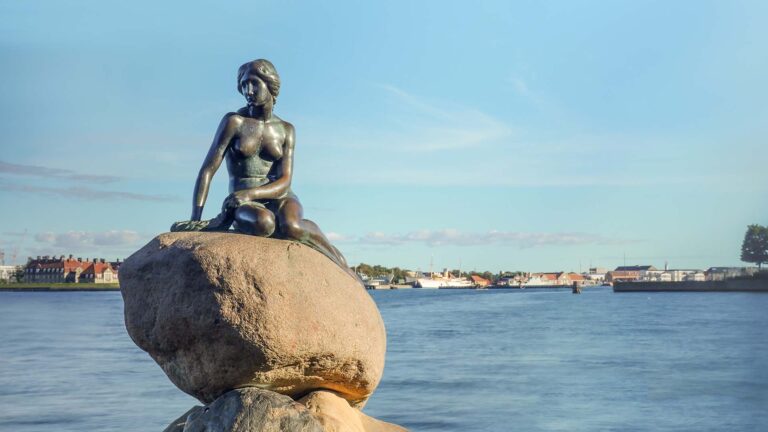
The Little Mermaid (Den Lille Havfrue) and Kastellet Fortress Copenhagen’s undisputed icon is small, but it’s a mandatory stop. If your ship is lucky enough to dock at Langelinie, you’ll be just a pleasant 10 to 15-minute walk away through a coastal park. Right next to it, you’ll find Kastellet, an impressive star-shaped military fortress. If you arrive at Oceankaj, you’ll need to take a bus or taxi, which will take about 15 to 20 minutes to reach this area.
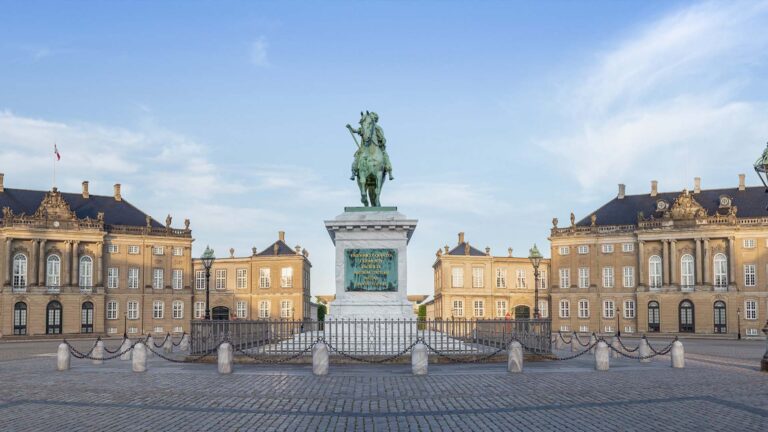
Amalienborg Palace The residence of the Danish royal family consists of four identical palaces set around an octagonal square, famous for its daily changing of the guard at 12:00 noon. From Langelinie, it’s a natural continuation of your walk: you can get there on foot in about 20 minutes by following the coastline south. From Oceankaj, the fastest way is to take the metro and then walk a short distance, with a total journey time of about 25 to 30 minutes.
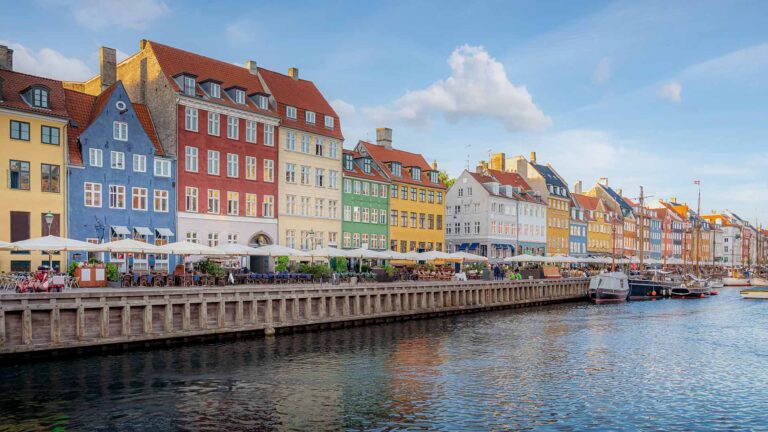
Nyhavn (The New Harbour) Copenhagen’s most famous postcard, featuring a canal lined with colorful 17th-century townhouses and wooden sailboats. If you start from Langelinie, you can take a highly scenic 30-minute walk, or shorten the distance by hopping on one of the public water buses. If you are at Oceankaj, the most efficient way is to take the M4 metro line directly to Kongens Nytorv station, which will drop you literally at the top of the canal in about half an hour.
Tivoli Gardens and City Hall Square The original amusement park that inspired Walt Disney is located in the vibrant commercial heart of the city. Because it’s on the opposite side of the historic center from the ports, the walk from Langelinie can take about 45 minutes. The most convenient way from any terminal (both Langelinie and Oceankaj) is to use the commuter train (S-train), metro, or city bus to get to the central station in about 30 to 40 minutes.
Practical Information for Cruise Passengers
-
A card paradise: Denmark uses the Danish Krone (DKK). However, it is one of the most digitized and cashless societies in the world. You can pay for your metro ticket, a souvenir, or even a hot dog at a street stand with your credit card or mobile phone. Exchanging cash is practically unnecessary.
-
Beware of bicycles: Copenhagen is the bicycle capital of the world. Bike lanes are everywhere, and bicycle traffic is fast and dense. Golden rule: Always look both ways before crossing a bike lane and never walk in them.
-
Flawless public transport: The metro runs 24 hours a day, is driverless, and is incredibly easy to navigate. They also have Harbour Buses that run on standard public transport tickets, offering a fantastic and cheap way to see the city from the water.
-
Language: The official language is Danish, but you will be amazed by the locals’ level of English. Practically everyone, from the bus driver to the shop assistant, speaks excellent and fluent English.
-
Variable weather: Danish weather, even in the middle of July or August, is unpredictable. The sun can shine and it can rain within the exact same hour. Dressing in layers and always carrying a small umbrella or a light raincoat in your daypack will save your day.