Welcome to a new chapter in our series about our experience in Japan aboard a cruise from Korea. After the day in Kochi, today we stop in Kobe and visit Kyoto!
Kobe is one of the most important cruise ports in Japan, and our ship stayed overnight here, which allowed us to take longer and more extensive excursions. In Japan, there are so many tourist sites to visit that we had to spend time planning our itinerary. As I’ve mentioned in other posts, distances are long, another important point to consider.
The port of Kobe is very important, but the terminal is located in such a way that you cannot walk to the city, as there are elevated road crossings very close by. The only way to get around is by car or train. It’s also worth noting that the cruise terminal is large but doesn’t have shops, only tourist information (if you go, don’t expect to find shops like in many other terminals).
Kobe is a modern city with wide avenues, skyscrapers, and a sizable population. Taking advantage of its location, during our stay we decided to visit Kyoto on the first day and Osaka on the second, both cities we wanted to explore for their tourist attractions. We chose to visit Kyoto on the first day because it was quite a bit farther than Osaka (which is halfway between). We were excited to use the famous Shinkansen bullet train for the journey. So, as soon as we disembarked from the cruise ship, we took a taxi. Here it was noticeable that the city was more important than the previous ports, as there were many more taxis. We were also lucky to get a luxury one, with super-spacious seats and television—amazing! This taxi dropped us off at the station where we needed to catch the bullet train, as our first destination in Kyoto was the Fushimi Inari-Taisha shrine.
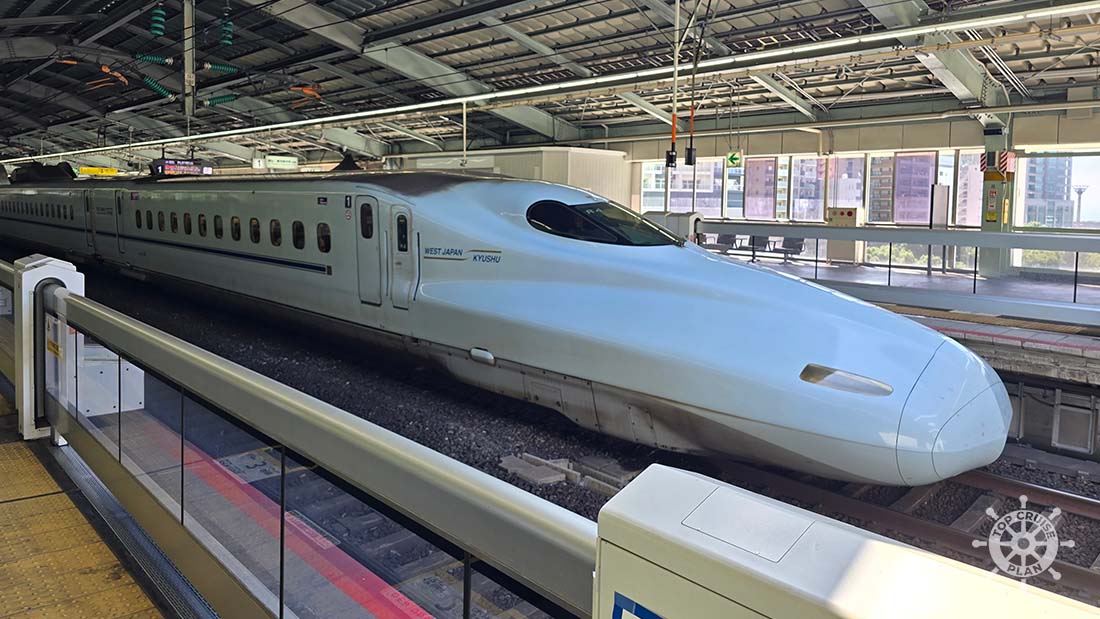
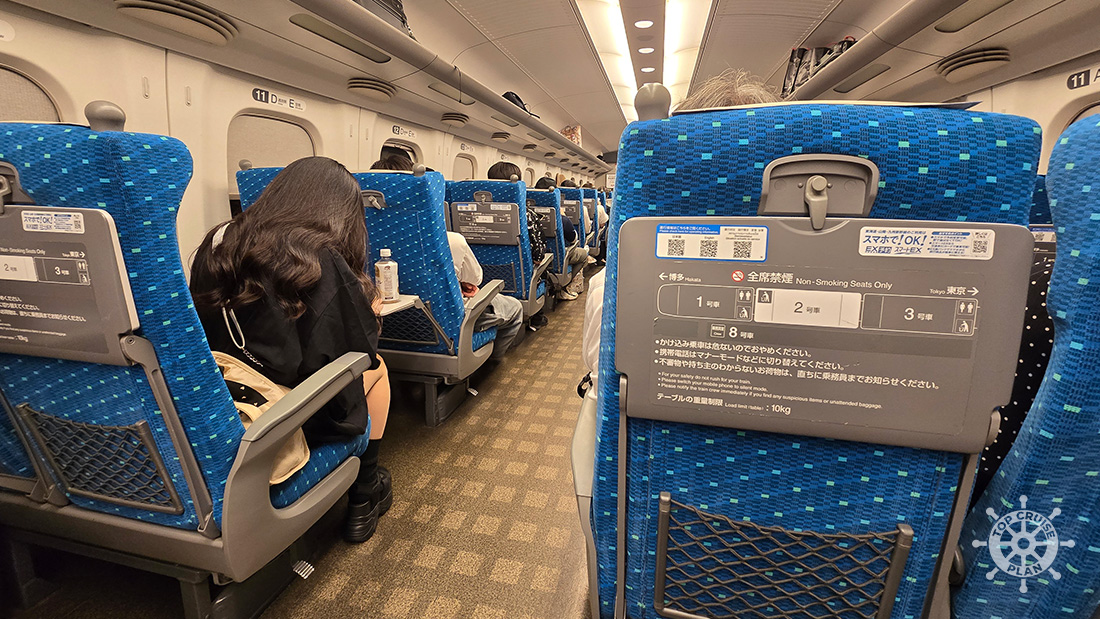
The bullet train has a very modern aesthetic. You can buy different types of tickets, from premium to more economical options. Since it wasn’t very cheap (almost 30 euros per person round trip), we bought the most economical ones. We were very impressed that there are rectangles painted on the platform floor for people to line up in an orderly fashion. When the train arrives, it stops so that its doors align exactly with these lines. Additionally, there are metal railings that open automatically, providing a greater sense of security by creating a physical barrier between the train and the track. The Shinkansen bullet train takes approximately 30 minutes to travel from Kobe to Kyoto. It’s the fastest and most comfortable way to travel between these two cities.
Fushimi Inari-Taisha
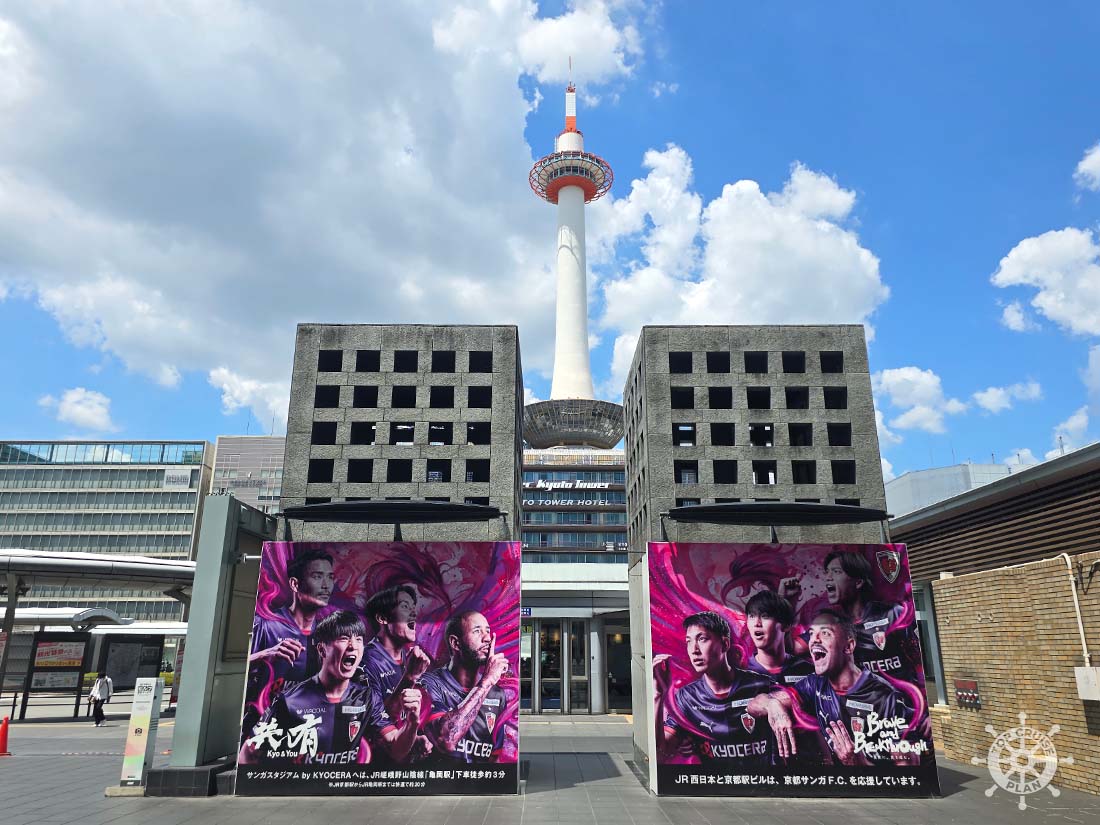
We arrived in Kyoto and, at the train station itself, ordered an Uber to take us to Fushimi Inari-Taisha. During the journey, we observed that Kyoto was a very modern city with skyscrapers and quite a large population. What a shame not to have more time to wander the streets.
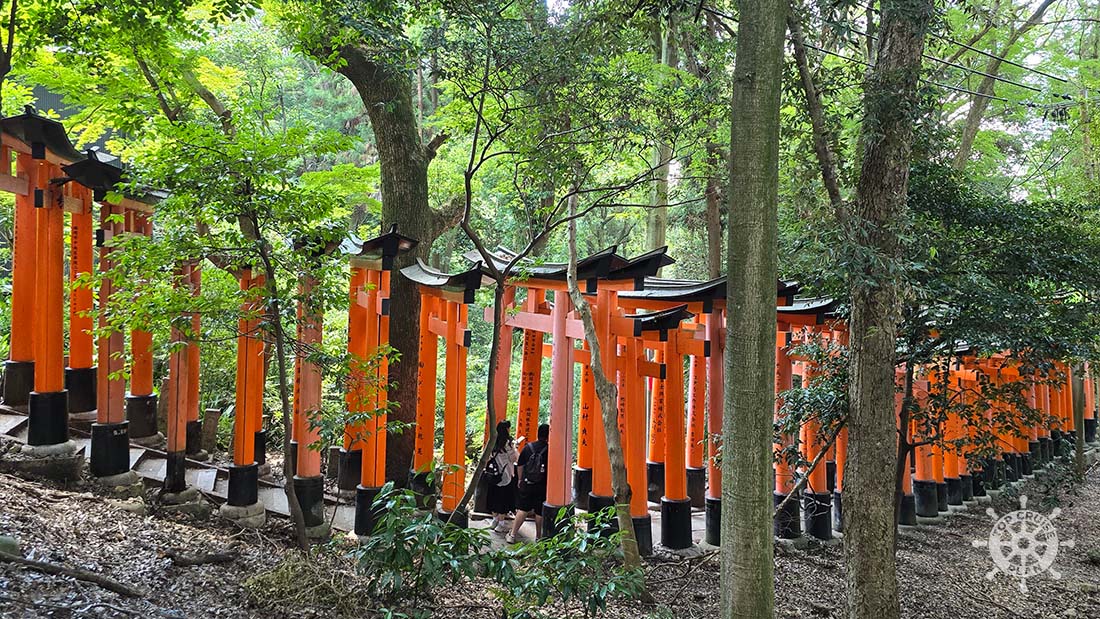
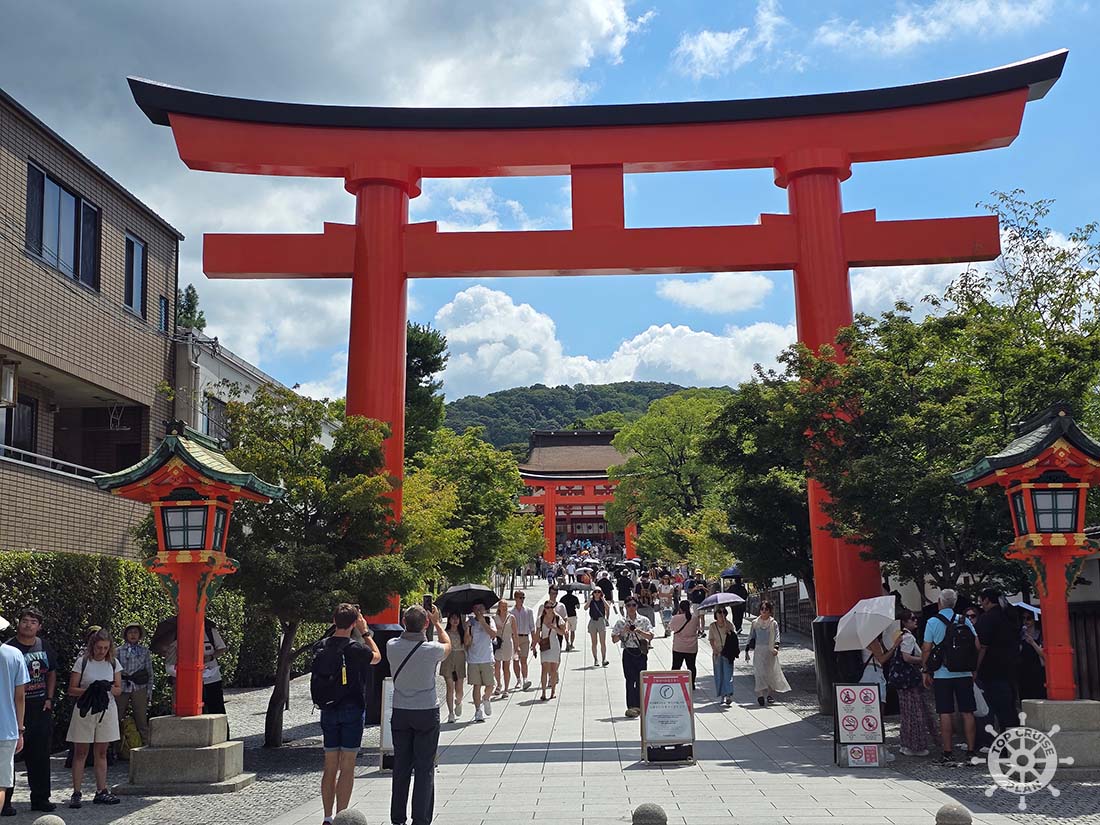
We were eager to reach the shrine and, when the Uber finally dropped us off, we were impressed. As soon as we got out, we saw a huge torii gate in bright orange. There were quite a lot of people, but it was understandable as it was summer and vacation season.
Fushimi Inari-Taisha is the most important and oldest Shinto shrine in Japan. It is dedicated to the god Inari, protector of good harvests, rice, and success in business.
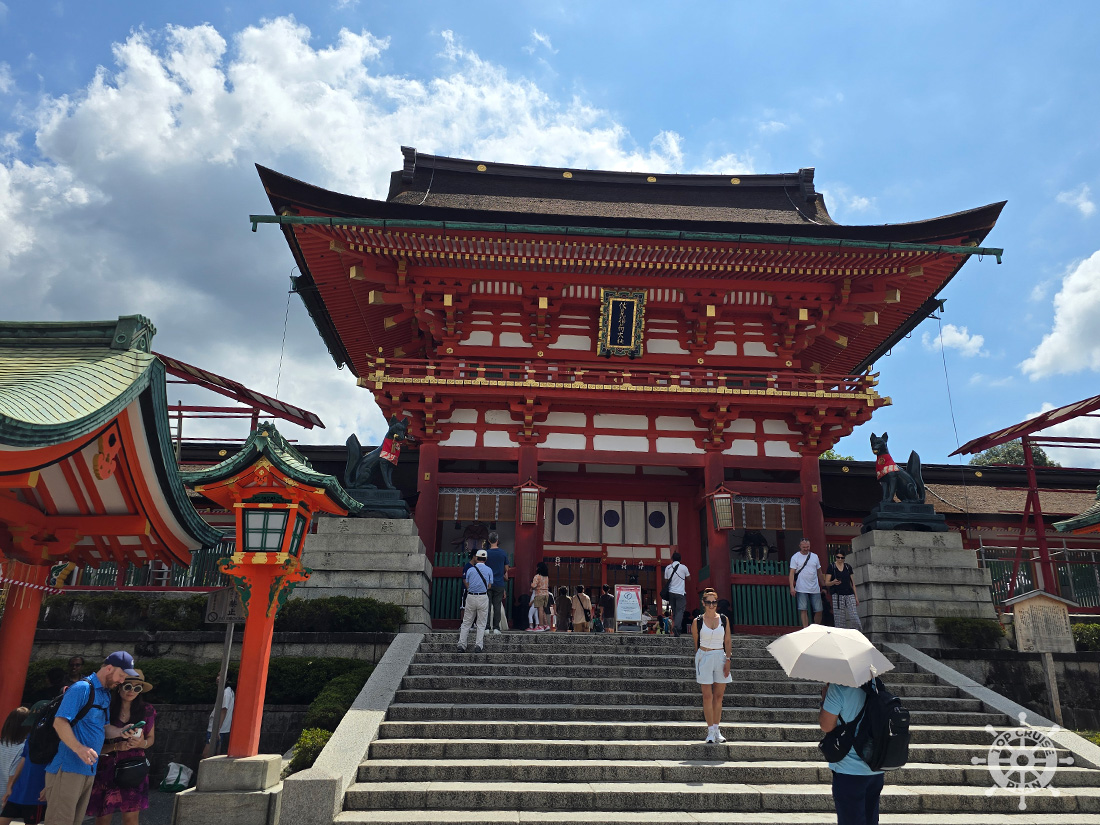
It is famous for its paths through thousands of torii gates and also for its numerous fox statues. These paths wind their way up Mount Inari, and during the route we found small secondary shrines.
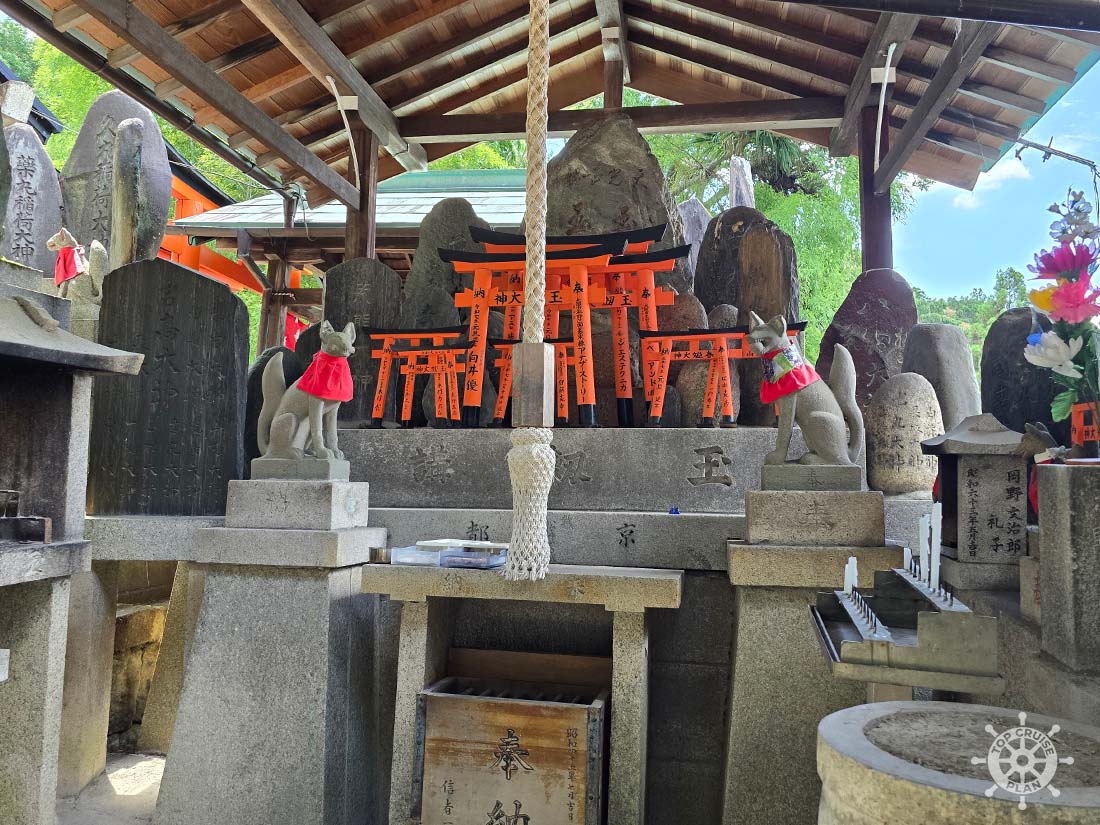
Upon entering, we were eager to photograph these paths full of torii gates preferably without people, but then we discovered that the trails didn’t end. There were many opportunities to take spectacular photos with few people.
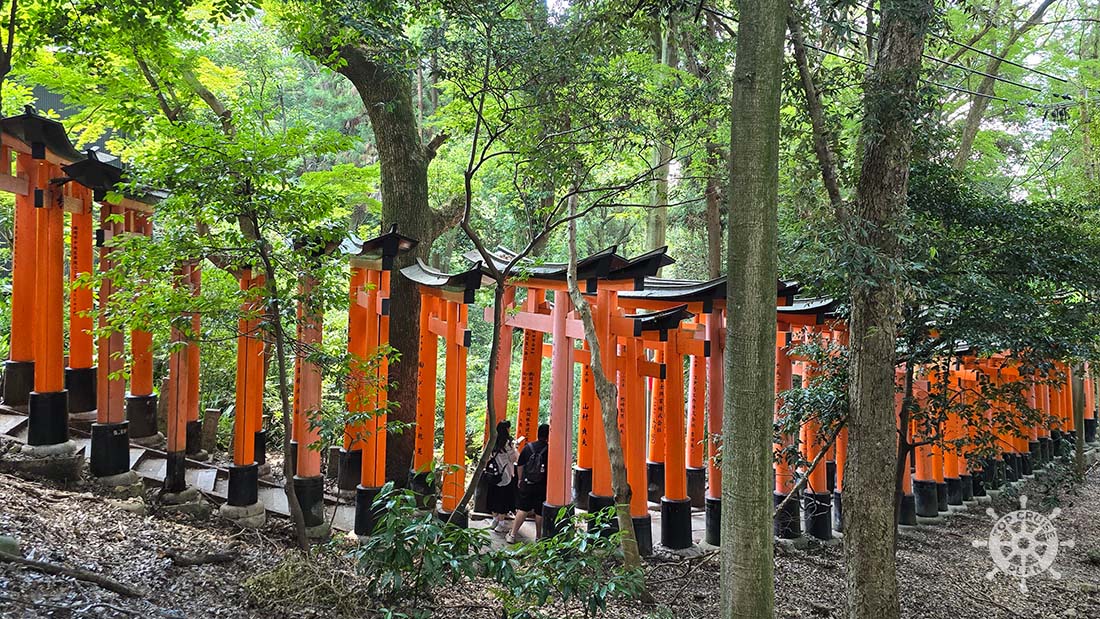
As you climb the mountain, the paths become steeper, some with slight steps that can be quite tiring, especially in the heat, although the entire route is in the shade.
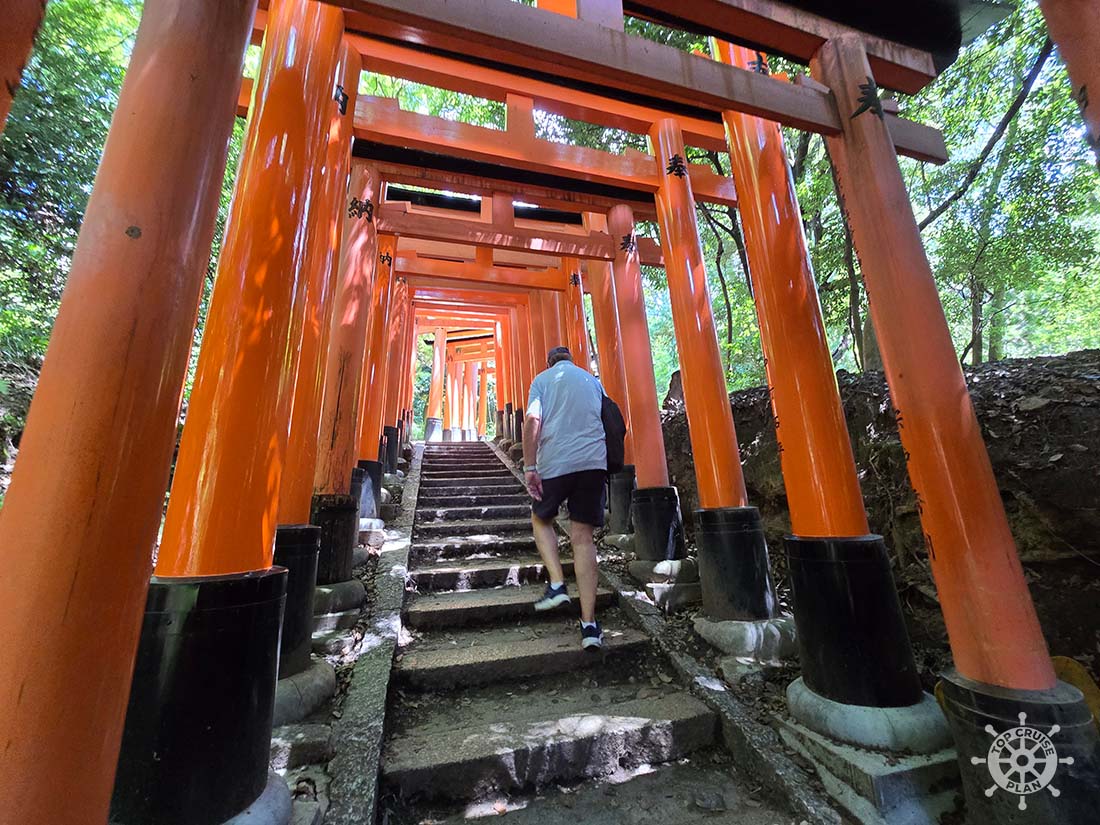
We didn’t climb to the summit, as the complete route takes about 3 hours to go up and down. After exploring several trails, we decided to see more places in Kyoto because time flies. It’s truly a marvel, and I highly recommend visiting. I was very glad to have experienced it. The descent is all downhill and faster. There are also very nice souvenir shops and small food stalls. We bought some delicious ice cream.
Admission is free and it’s open 24 hours every day.
Geisha District
We took an Uber that brought us to Gion, the Geisha district, a highly recommended tourist spot. We arrived around noon and the heat was quite intense. This district is truly picturesque, with cobblestone streets and streets formed by very low buildings. Many are wooden houses decorated with typical Japanese elements like lanterns, all perfectly clean and well-maintained.
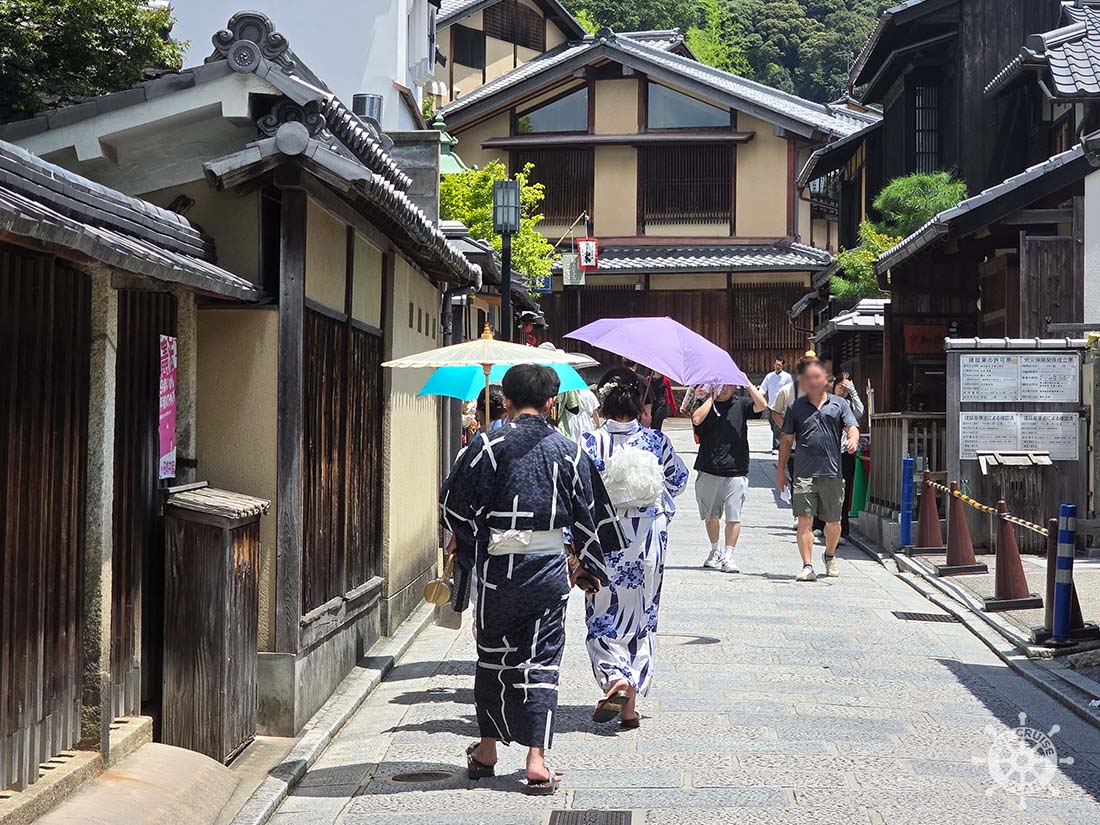
Walking there was like stepping back in time, transporting oneself to traditional Japan. In the area, there are numerous establishments where you can taste Japanese food, souvenir shops, and stores with geisha clothing. It was a wonderful experience to walk its streets and admire these peculiar little houses.
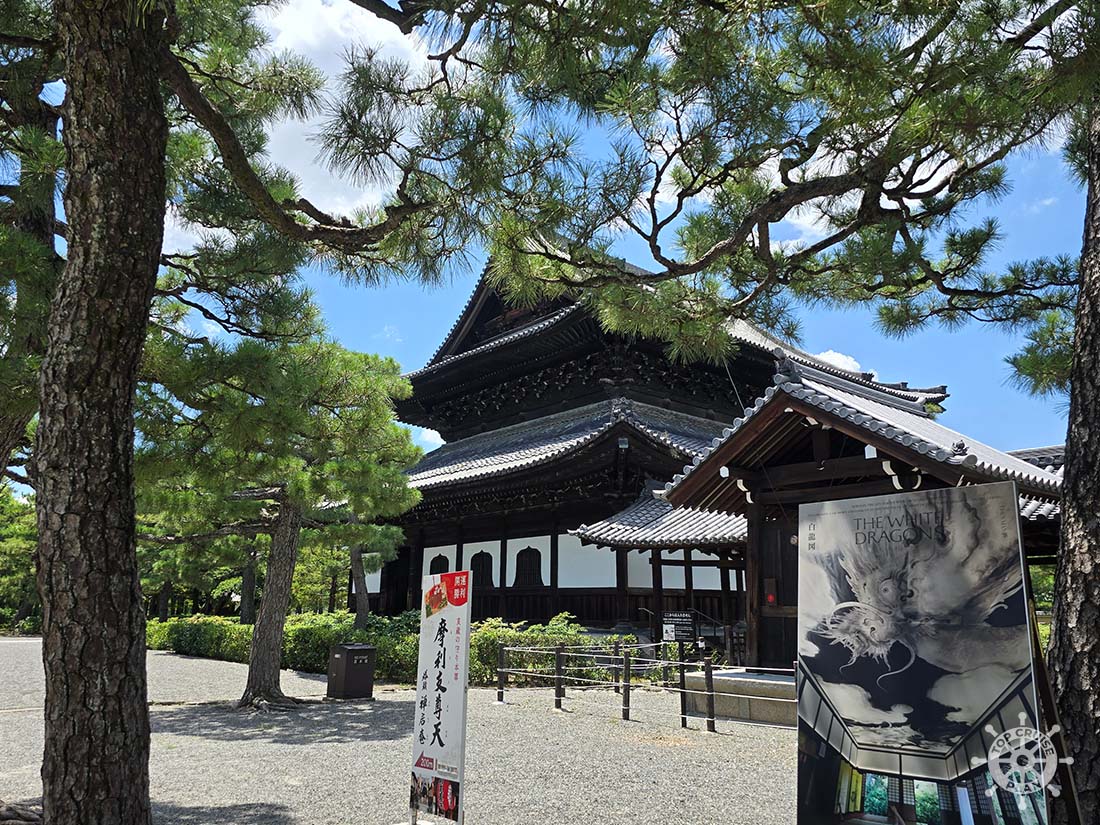
There were quite a few groups of tourists, and we were able to see some geishas, although they say it’s more common to find them in the afternoon. We also observed several restaurants and venues where geisha dinner shows are organized.
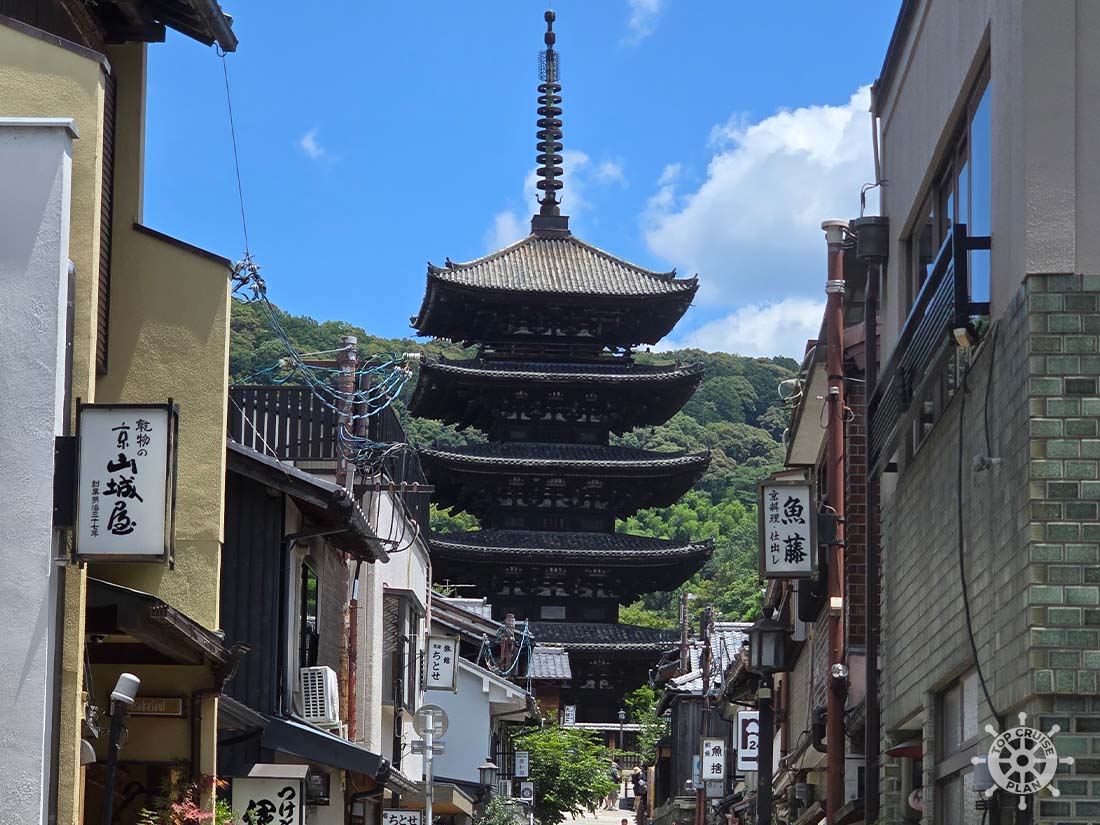
Our final stop on our walk through Gion was the Yasaka Pagoda, the only remaining structure of the Hokanji temple, which stands out among the houses for its height and spectacular structure. In fact, all visitors were taking photos in the street with the pagoda in the background, a very beautiful and striking image due to the height of the building.
After this visit, we returned to the ship to rest and gather our strength for the next day when we would go to Osaka. The next chapter with our experience in this city is now available: Osaka – Castle and stroll through Dotonbori (Glico Man)