Welcome to a new article of our series about our experience in South Korea and Japan on a cruise. Previously, we went to Kyoto and today we visit the city of Osaka. Osaka is the third most populous city in Japan, after Tokyo and Yokohama, and is known as “Japan’s kitchen.” Due to its importance, we decided to visit it during our second day in Kobe, as we were only about 30 km away.
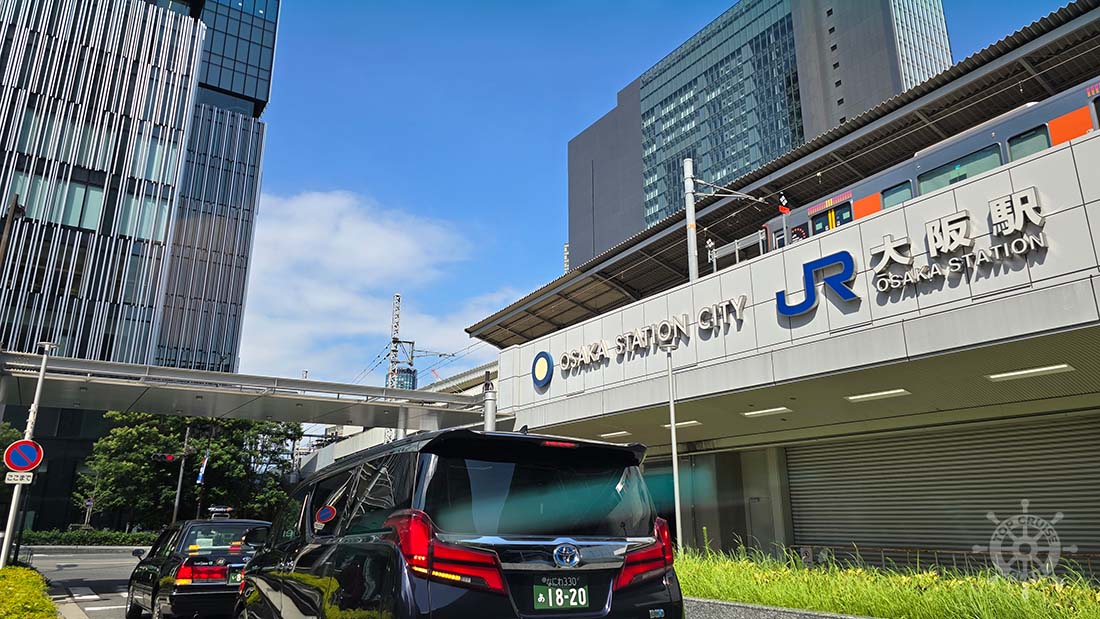
We had two transportation options: the bullet train or a more economical but still fast conventional train. We opted for the cheaper option, as we had already experienced the bullet train on our trip to Kyoto the previous day.
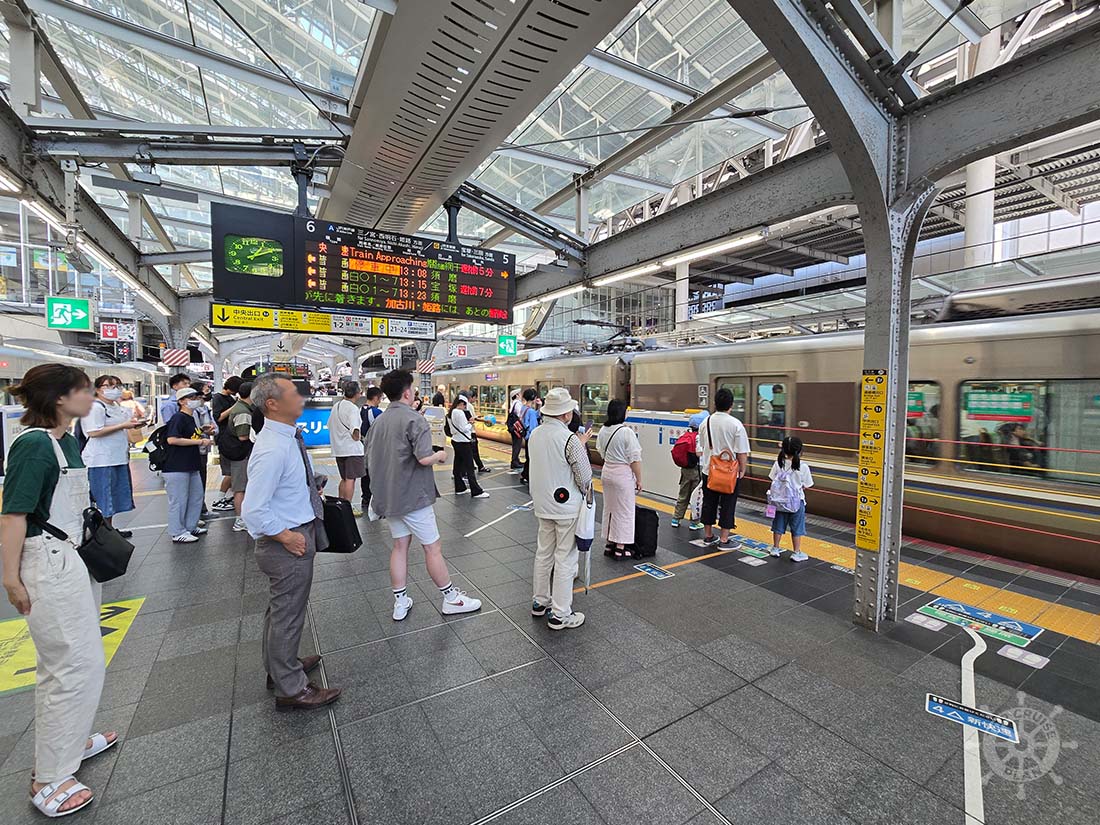
Among Osaka’s tourist attractions, we chose to first visit Osaka Castle and spend the remaining time in the Dotonbori district.
We left the ship early and took an Uber that dropped us off at the train station. In Kobe, there are no problems with Uber or taxis, as it’s a modern city with extensive transportation options.
Osaka Castle
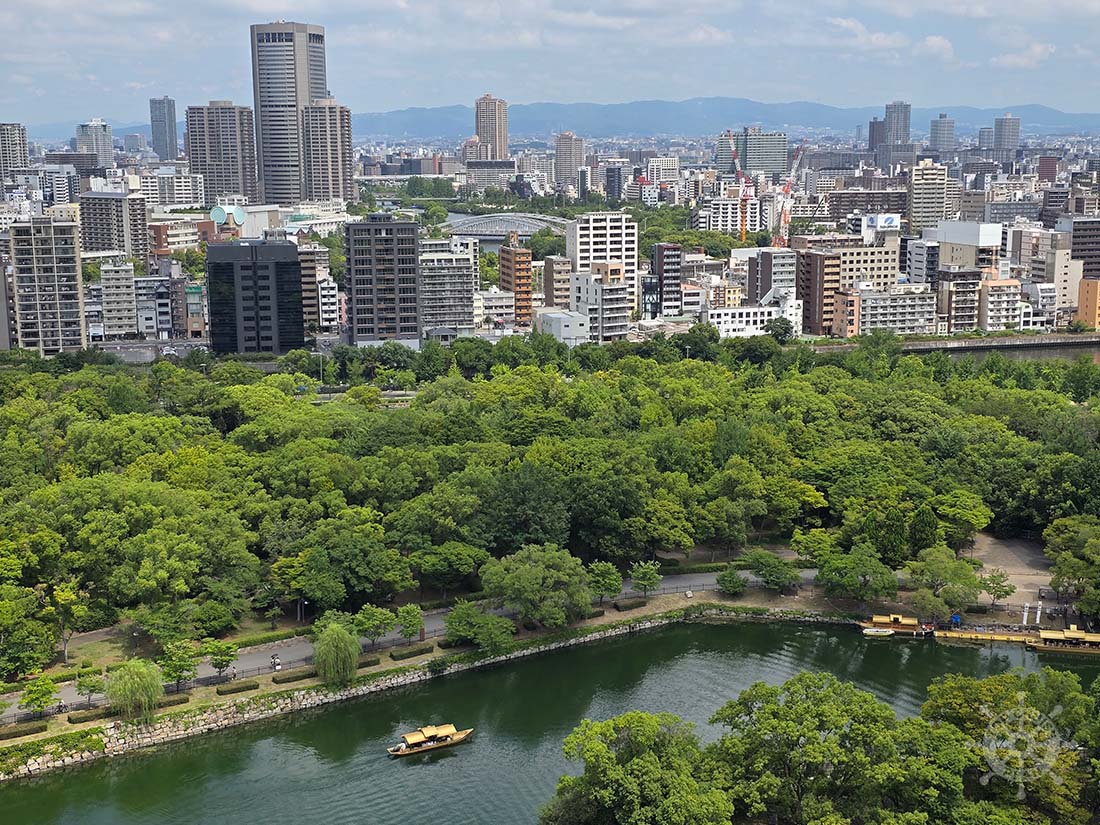
The castle is located within a large public park with abundant vegetation, numerous paths, and rest areas. We visited in August, when the heat is considerable. They say that in spring, when cherry blossoms and other tree species bloom, it’s especially beautiful. In any case, all parks in Japan are very well-maintained and have lush vegetation, which makes for a pleasant walk.
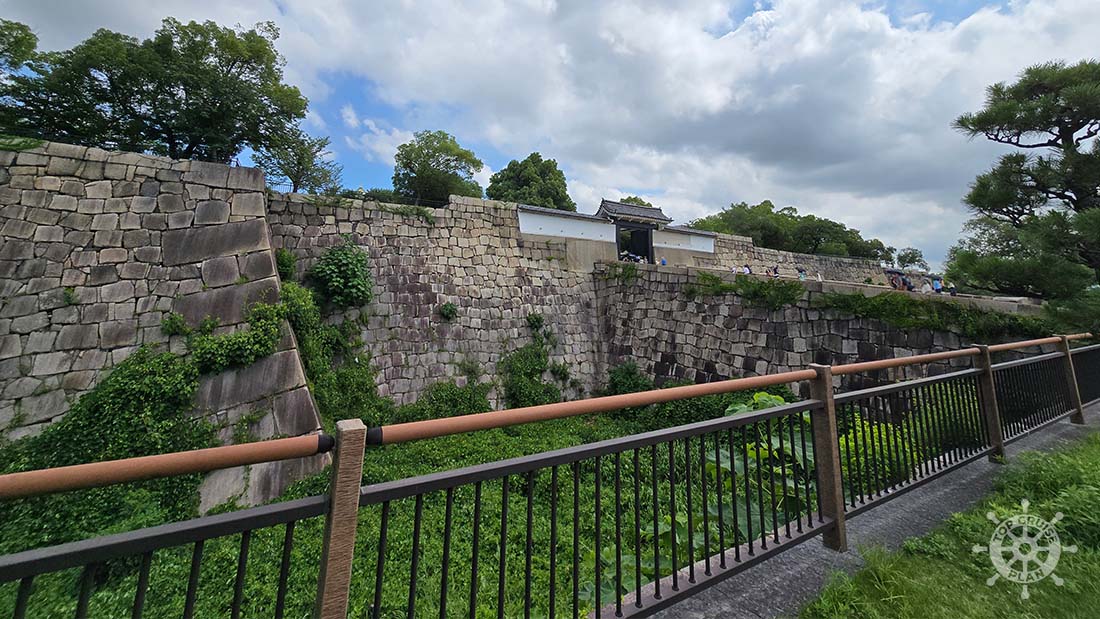
It’s advisable to wear comfortable shoes and light clothing because from the park entrance to the castle, there’s quite a distance to walk. Additionally, if you visit during peak season like we did, you’ll have to queue to enter.
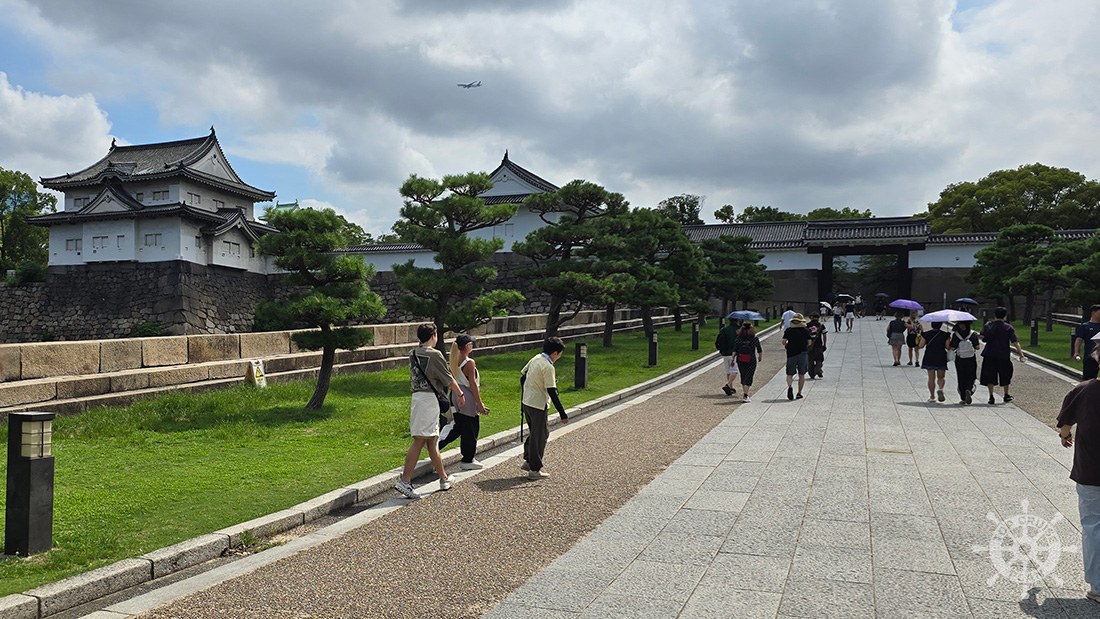
Osaka Castle, one of Japan’s most emblematic monuments, stands as a symbol of power, unification, and perseverance throughout a tumultuous history of destruction and reconstruction. Its origin dates back to 1583, when the powerful feudal lord Toyotomi Hideyoshi, a key figure in Japan’s unification, ordered its construction with the ambition that it would surpass any existing castle. Built on the foundations of the former Ishiyama Hongan-ji temple, the original castle featured a majestic five-story main tower, with gold leaf details that dazzled visitors and reflected its lord’s opulence.
After Hideyoshi’s death, the castle became the epicenter of the power struggle. In 1615, during the Siege of Osaka, the forces of the Tokugawa shogunate defeated the Toyotomi clan, destroying much of the original fortress. The Tokugawa clan rebuilt the castle in the 1620s, erecting even more imposing stone walls and a new main tower. However, misfortune struck again when, in 1665, lightning caused a fire that consumed the main tower.
During the following centuries, the castle suffered progressive deterioration. The final blow came during World War II, when aerial bombings destroyed several of its structures. It wasn’t until 1931 that reconstruction of the main tower in reinforced concrete began, restoring its exterior splendor. The interior was transformed into a modern museum that narrates its fascinating history. Today, Osaka Castle, surrounded by a vast park and its original moats, attracts millions of visitors, standing not only as an architectural gem but also as a tangible testimony to Japan’s rich and complex history.
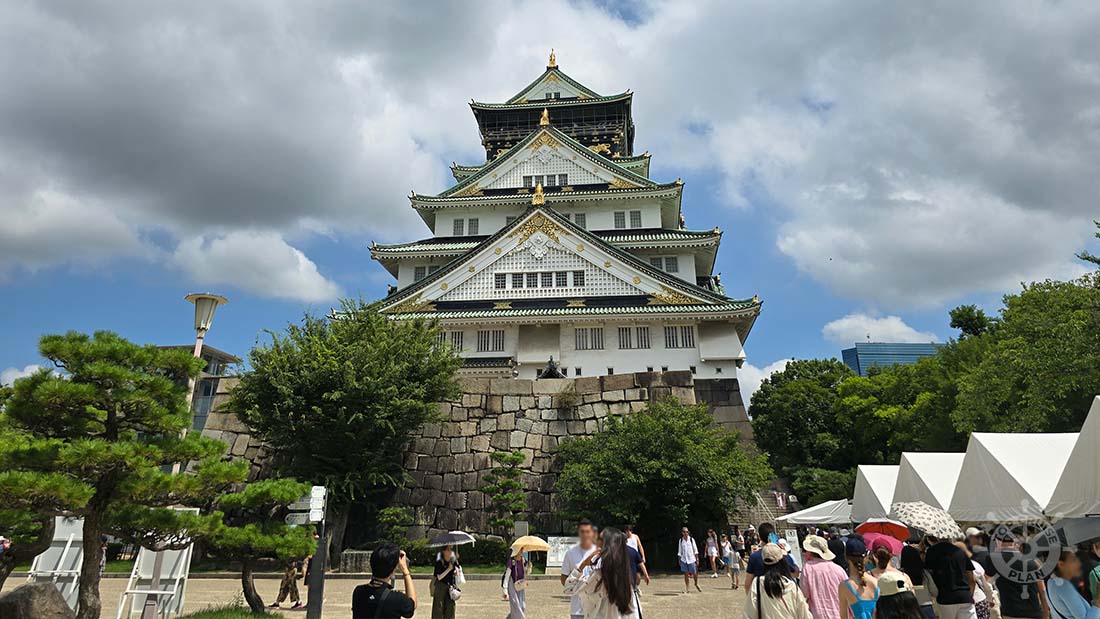
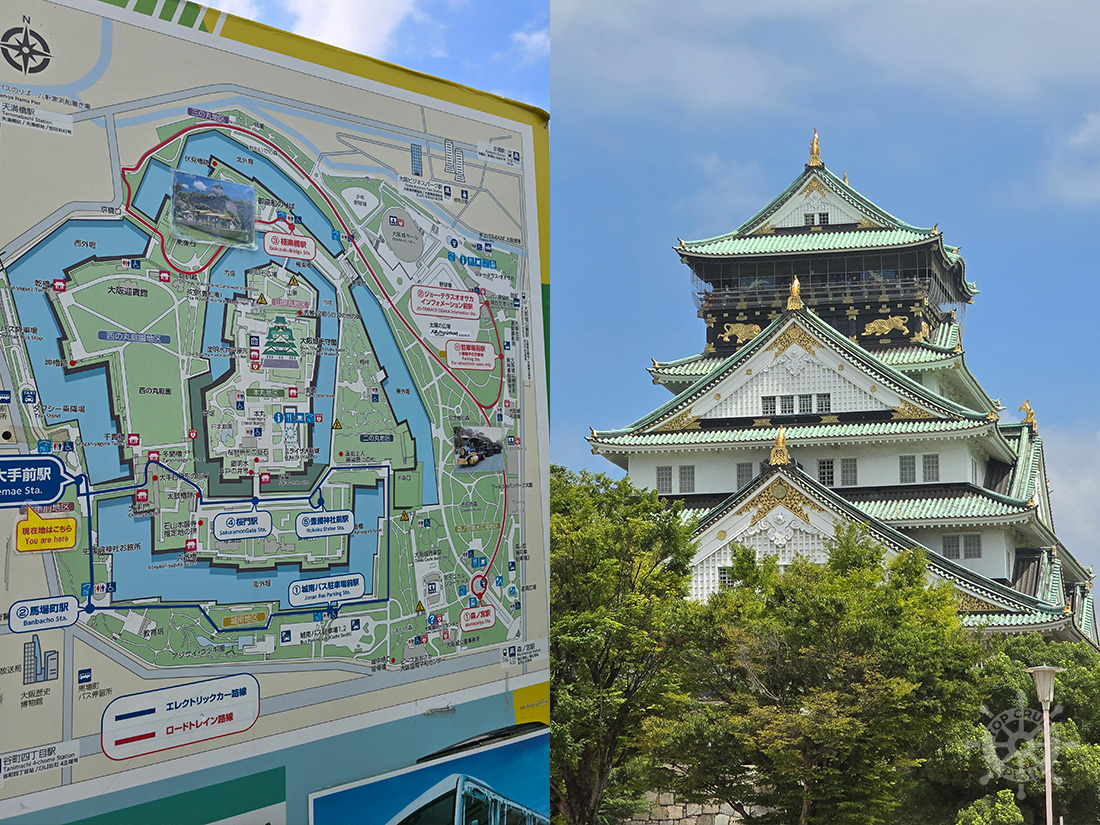
Currently, Osaka Castle presents itself as a magnificent concrete reconstruction that respects the imposing aesthetics of its feudal past. Although its exterior, with its white walls and gold-ornamented green roofs, evokes the grandeur of samurai Japan, its interior has been completely modernized to house a fascinating museum. Through its eight floors, accessible even by elevator, visitors can immerse themselves in the history of Toyotomi Hideyoshi and the city itself through models, armor, and historical documents.
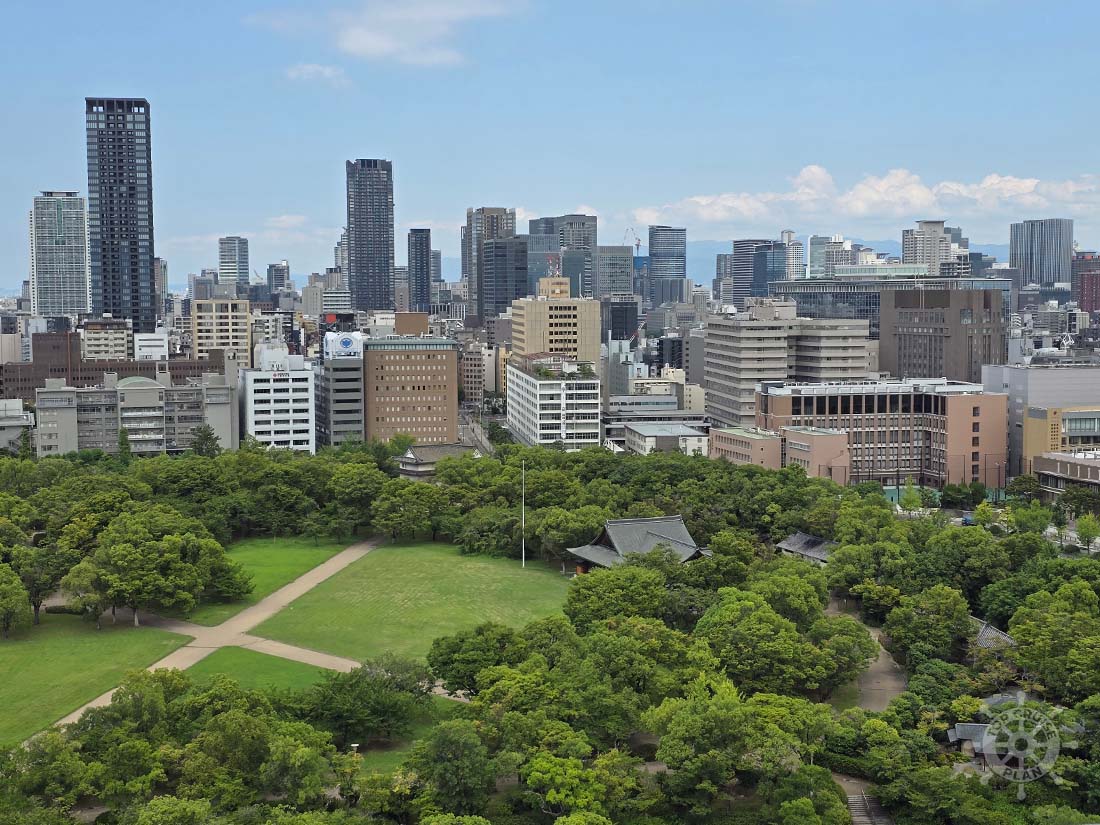
There are two functioning elevators that go up to the penultimate floor. If you prefer, you can walk up, but most people like us opted for the elevator. The wait was brief, about 10 or 15 minutes, as each elevator could fit quite a few people. The top floor serves as a 360-degree panoramic viewpoint, offering spectacular views of the extensive Osaka Castle Park and the city’s modern skyline. We did a complete circuit and took many beautiful photos. There was also a very fresh breeze which was much appreciated.
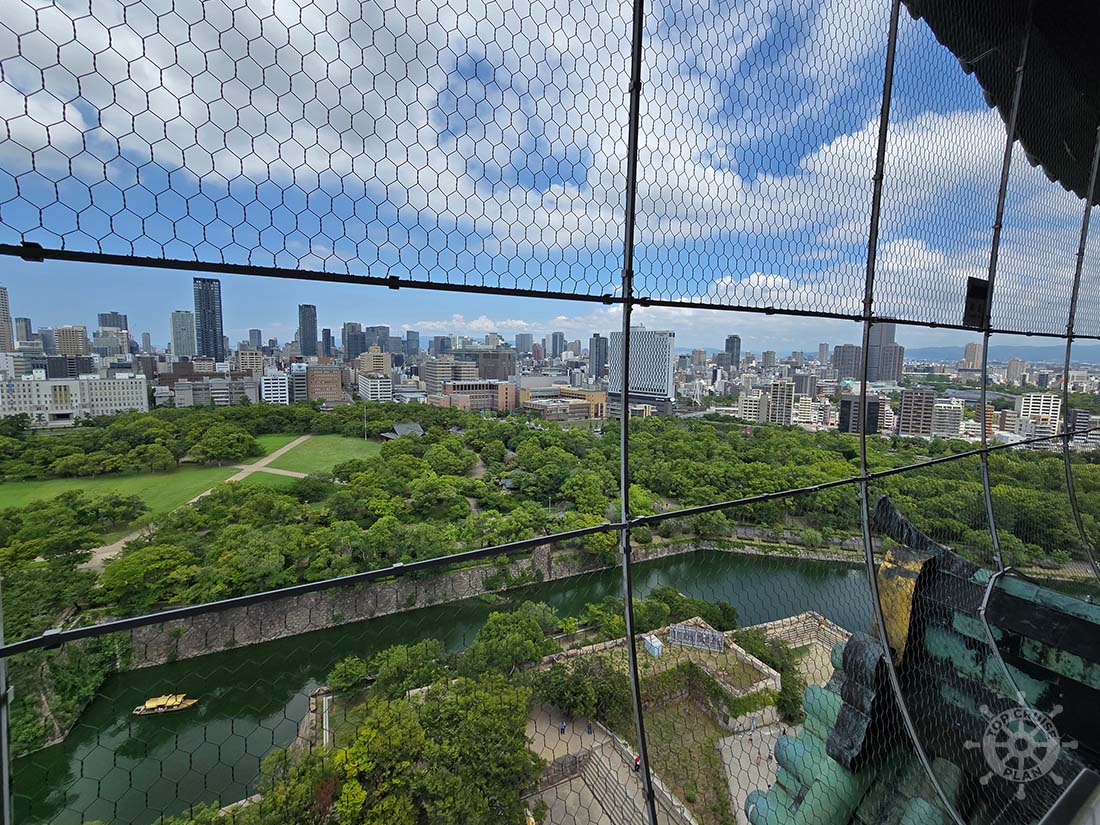
We didn’t spend too much time on the other floors. It was quite crowded, and if you wanted, you could read screens with very detailed information about the different battles and historical periods. We preferred to focus our attention on the display cases with historical scenarios and objects. Before leaving, we visited the souvenir shop on the exit floor and bought some souvenirs.
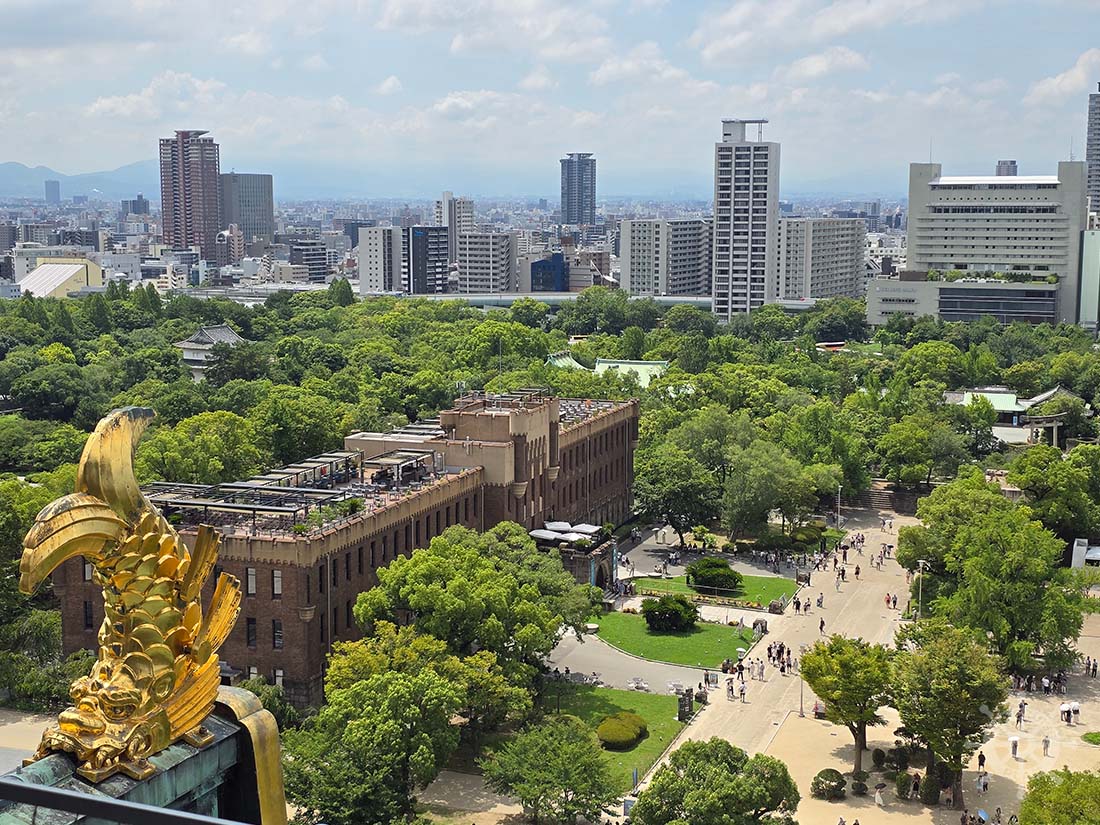
The park where the castle is located covers approximately two square kilometers, serving as a green lung for the metropolis. It surrounds the fortress with its impressive moats and stone walls. The grounds include the beautiful Nishinomaru Garden, an ideal place to contemplate the cherry blossoms during spring, as well as various sports and cultural facilities. The castle is not just a historical monument but a center of leisure and culture for citizens and tourists alike.
Dotonbori (Glico Man)
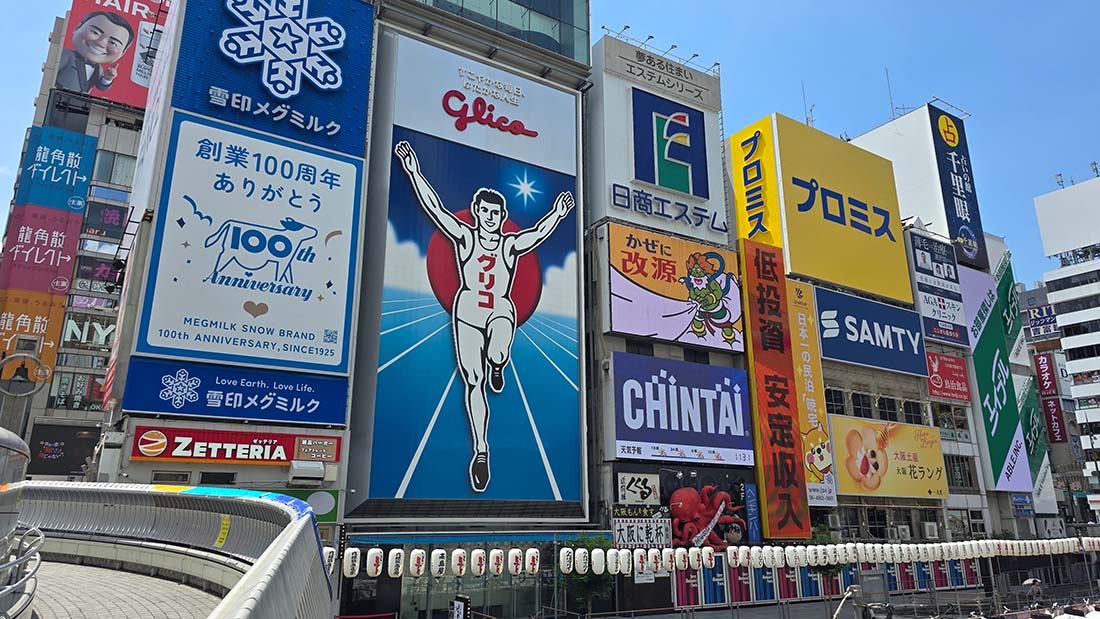
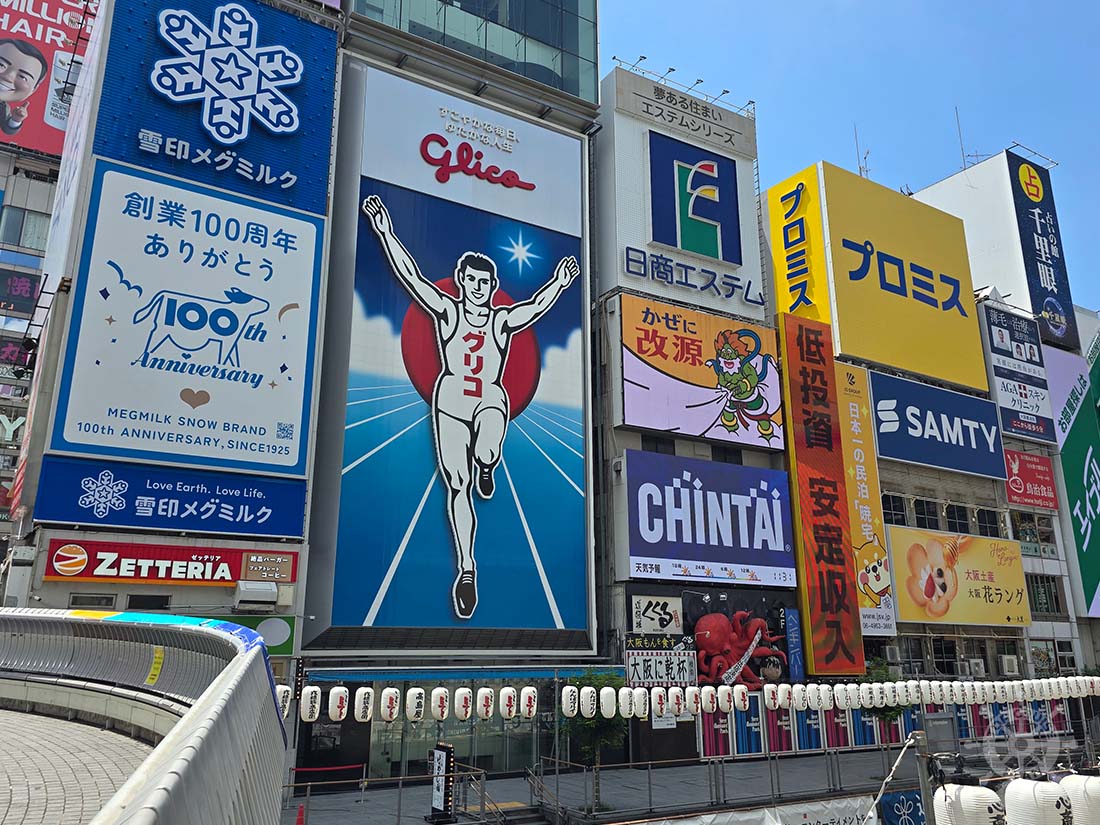
The most famous street in Osaka is Dotonbori, known for its neon lights, restaurants, shops, cafes, and the iconic illuminated sign of Glico Man. Although we went in the morning, there were many people taking selfies and photos from all angles. At night, with everything illuminated, it’s spectacular. It’s also a very famous gastronomic area.
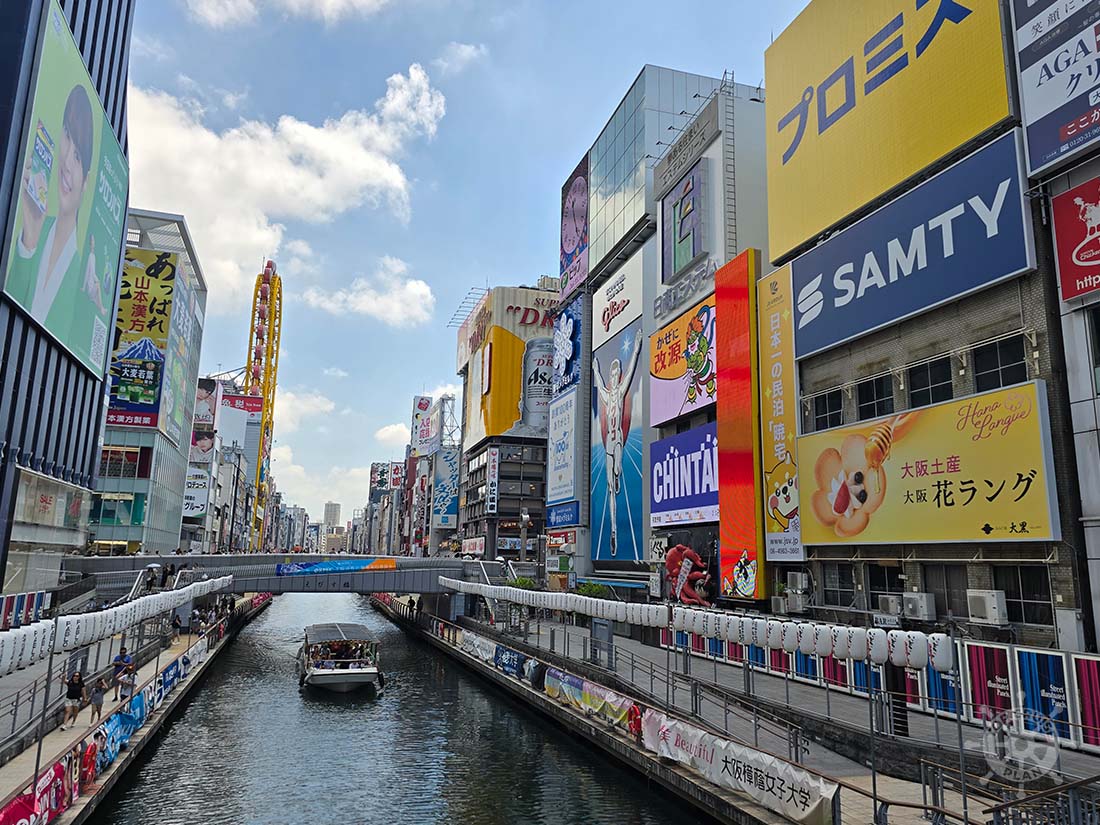
This tourist zone is in the Namba district, next to the canal of the same name, and is an essential area to visit if you’re in Osaka.
At night, this pedestrian area along the canal transforms into a dazzling spectacle of neon lights and giant, extravagant advertising signs. Among them, the most iconic is undoubtedly the “Glico Running Man,” this illuminated advertisement that since 1935 has become a symbol of Osaka itself and a mandatory meeting point for taking photographs.
Dotonbori is the epicenter of the kuidaore philosophy, which translates as “eat until you ruin yourself.” The area is a paradise for food lovers, with an endless offer that ranges from high-end restaurants to humble street stalls. Here it’s essential to try local specialties such as takoyaki (octopus balls), okonomiyaki (a kind of Japanese omelet or pizza), and kushikatsu (breaded skewers). The aromas emanating from the kitchens mix in the air, inviting passersby to constant tasting.
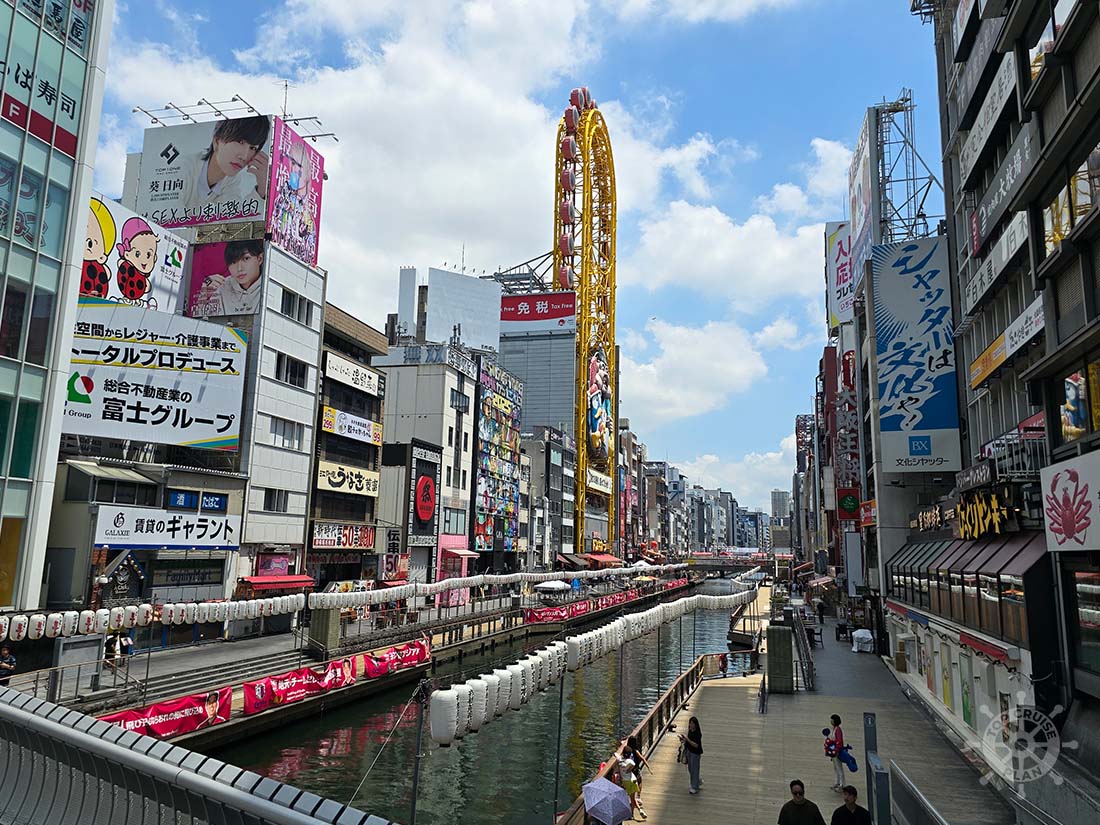
The canal, with its promenades and tourist boats offering a unique perspective of the illuminated signs, adds a special charm to the district. The atmosphere is always festive and bustling, full of life with theaters, shops, and a multitude of locals and tourists exploring its streets. Dotonbori is an unforgettable experience that captures the modern and traditional essence of Japan in one place.
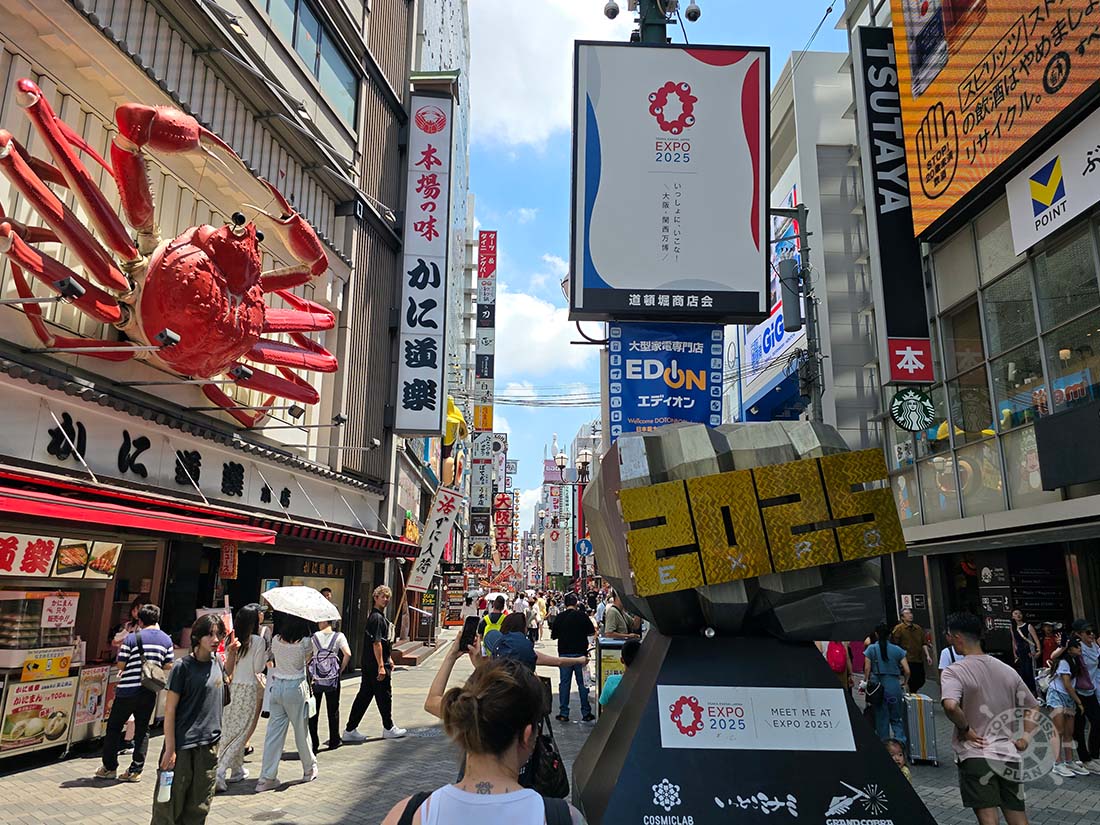
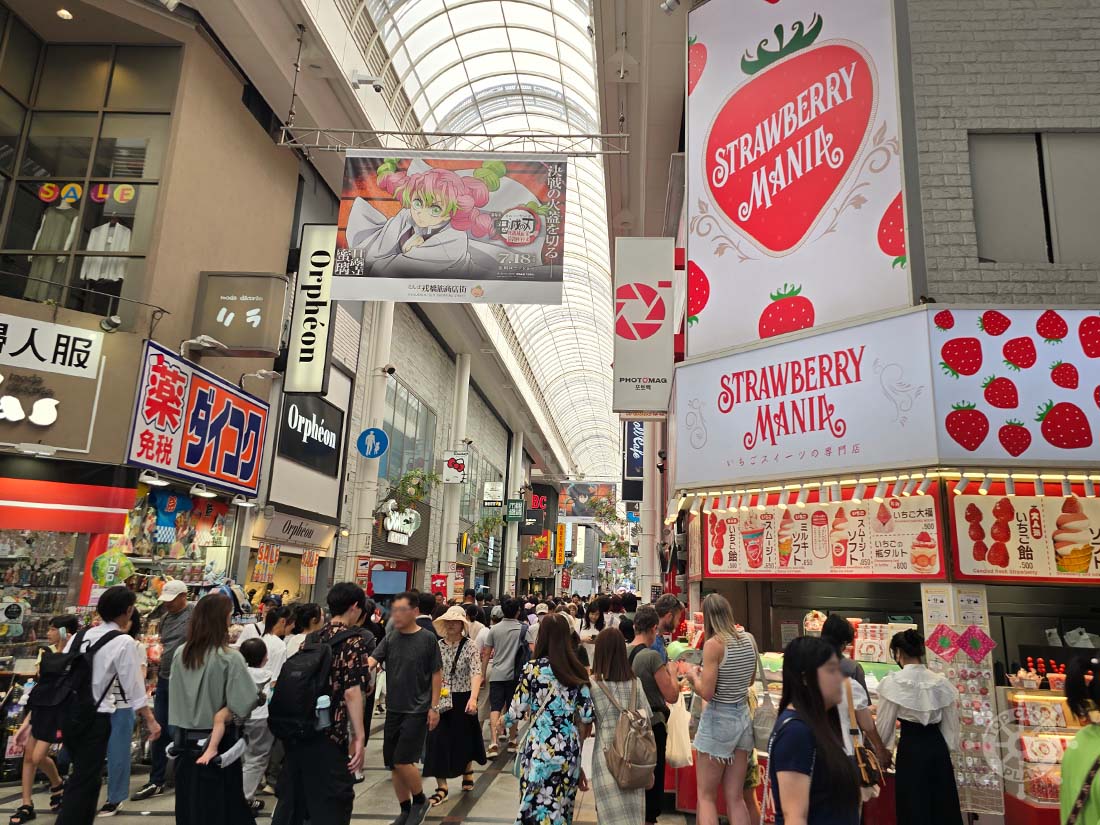
It’s also an excellent place to go shopping, from luxury brands to stores with very affordable prices. Cosmetics are a strong point in Japan, with great variety at good prices. I bought face masks and cream cleansers that I think are fabulous. There are also clothes and the famous surprise vending machines where you insert a coin. If you visit, take advantage to buy souvenirs here.
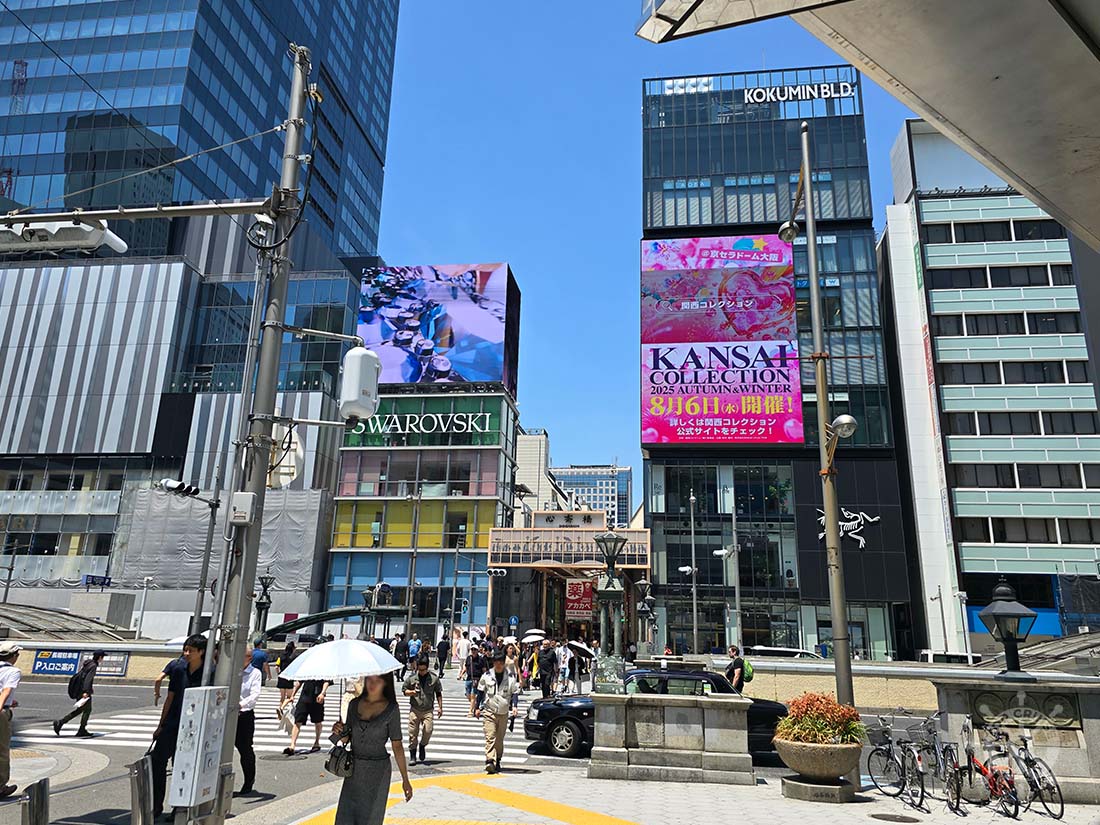
From there we returned to the ship for lunch, although we arrived quite late because time in Japan flies by, as there are many fascinating places to visit. The next day we visit Nagoya! We invite you to read the next article: Nagoya – Castle, Sakae and the Port Aquarium