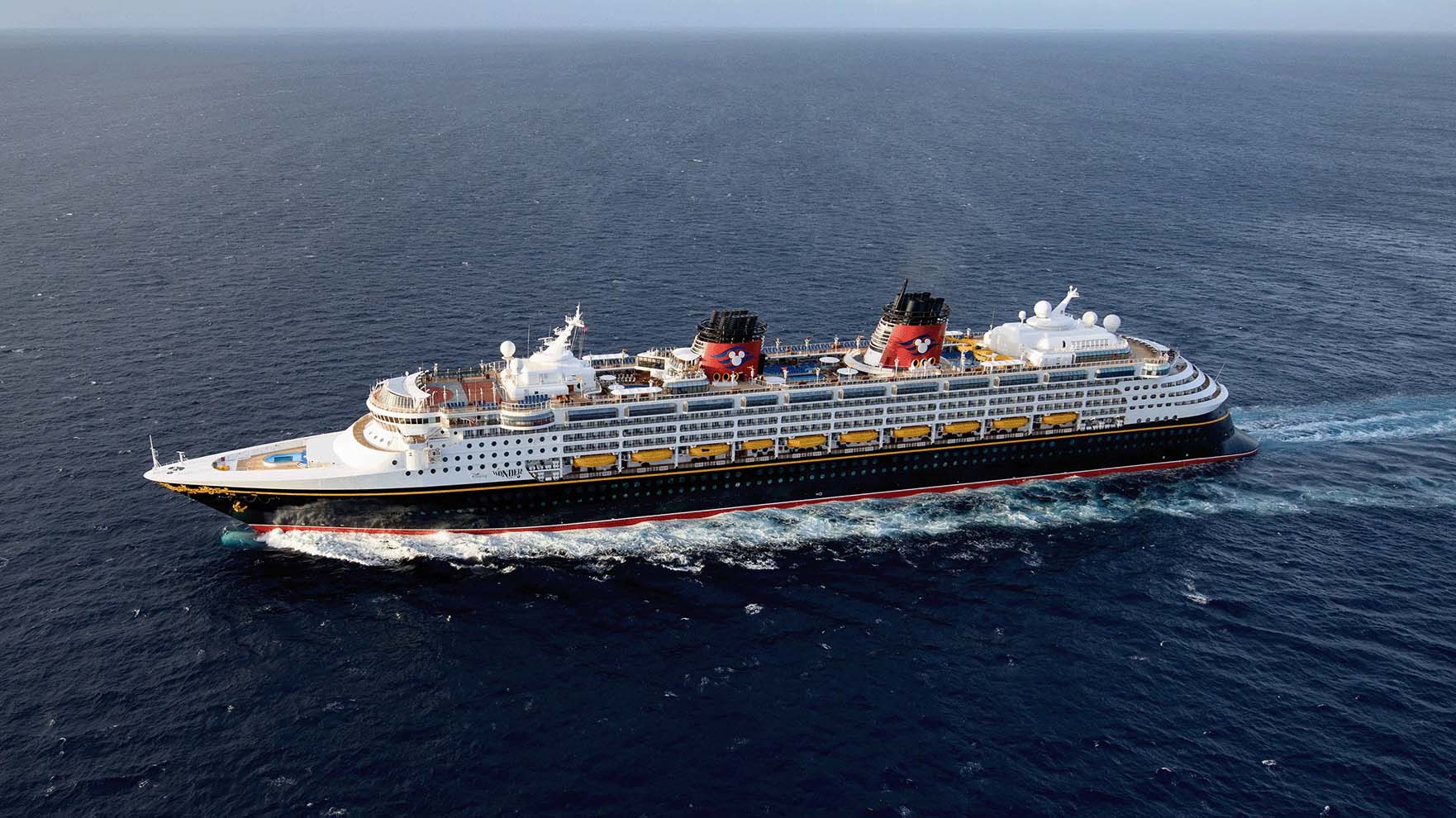
We reached the final chapter of our series about our experience in Japan on a cruise departing from South Korea. From the moment we disembarked from the cruise ship, we plunged back into the frenetic pace of the capital, exploring everything from the spiritual serenity of Meiji Shrine to the organized chaos of Shibuya Crossing. This last day in Japan was the perfect finishing touch to a trip that will forever be etched in our memories…
Disembarkation
As usual, the night before we left our bags outside the cabin and were left with the minimum luggage necessary. Our disembarkation time was around 8:30 am, even if you get up early you are always a little early. That day breakfast was a real odyssey, as everyone was in a hurry and the buffet was usually quite full. We went up well in advance.
It was time to disembark. We left the ship and went to get our bags at the indicated area of the port. Although they say that the departure is staggered, it is always quite crowded. It took us a while to get our bags and then the most chaotic part was getting an Uber, because they did not want people to accumulate at one point and forced us to change places. As we had already called an Uber, until we found the car it was a bit stressful.
Everything sorted out, we headed to our hotel in Shibuya, which we had booked to stay an extra night to get a better feel for Tokyo. The drive from the port to the hotel allowed us to appreciate the magnitude of the city: its skyscrapers, large avenues and abundant vegetation. I could not get enough of looking out the window.
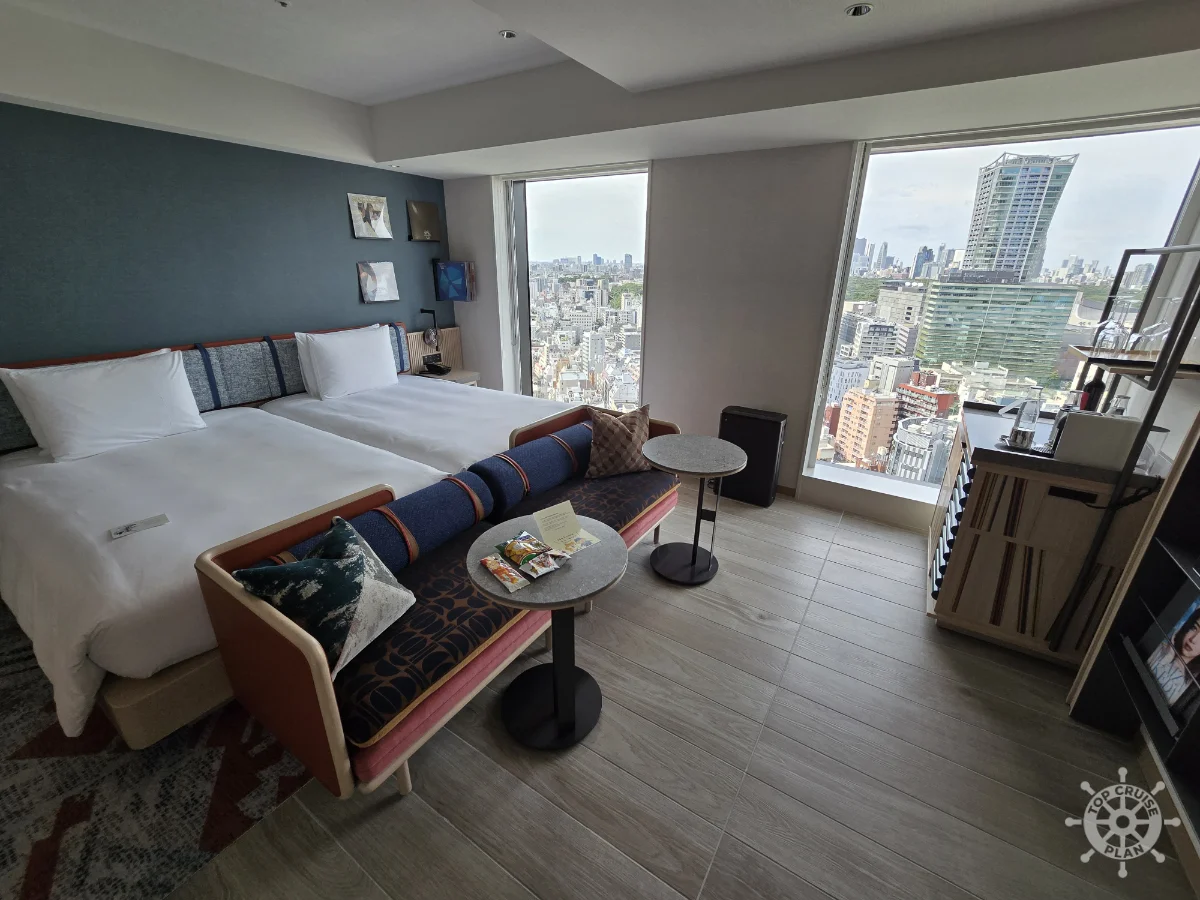
Our hotel of choice was the Hotel Indigo Tokyo Shibuya, which we had booked months ago. It is a modern hotel, very central and with good ratings. In addition, it belongs to the IHG chain and, as we had previously stayed in hotels of the same chain, we had a number of advantages such as more complimentary amenities and being able to check out an hour later.
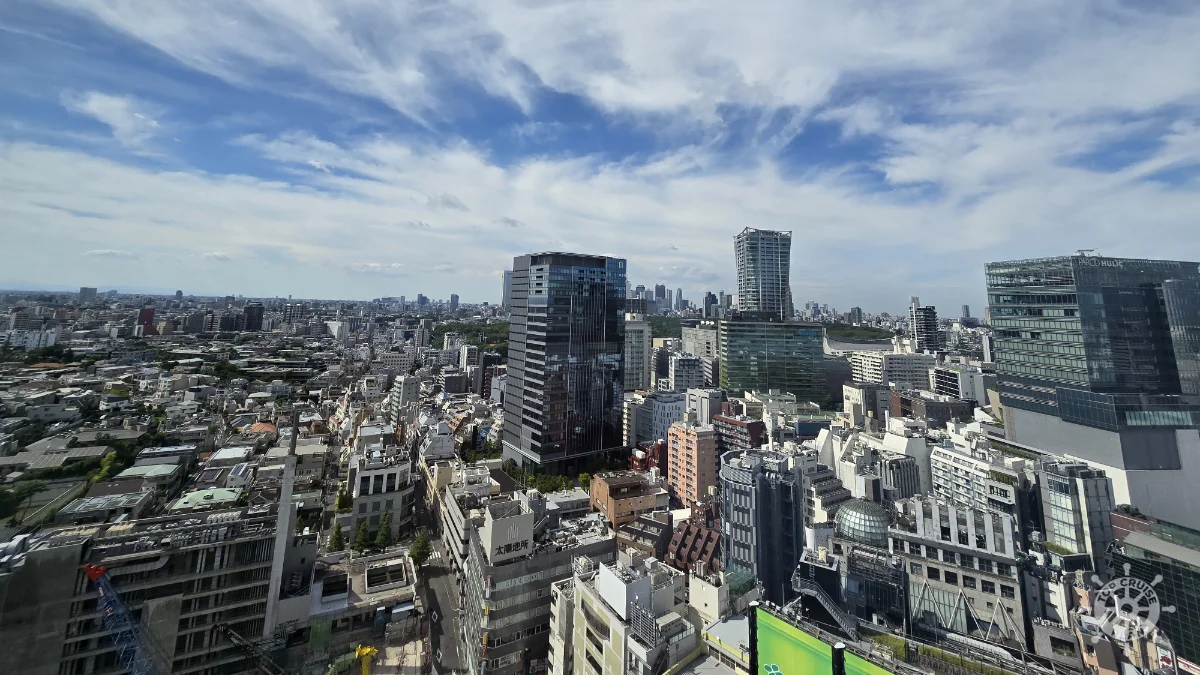
We loved the hotel: modern decor and very comfortable room, with spectacular views from the floor-to-ceiling windows. It was quite close to the Scramble Crossing and right across the street we had a Don Quijote (department store that has everything at very good prices) open 24 hours.
Meiji Shrine
Our first goal of the day was to visit the Meiji Shrine. For this we made use of our subway voucher and went to the nearest station. The subway in Japan is very punctual.
The Meiji Shrine, or Meiji Jingu, is an oasis of peace and spirituality in the middle of the hustle and bustle of Tokyo. Dedicated to the deified souls of Emperor Meiji and Empress Shoken, who guided Japan in its transition from feudalism to modernity, this Shinto shrine is one of the most important and visited in the country. Unlike other temples, its beauty lies not in opulence, but in its sublime simplicity and deep connection with nature.

Passing through its imposing cypress wood Torii gates, visitors enter a lush forest of more than 100,000 trees donated from all over Japan. This dense forest completely isolates the noise of the city. It feels like you’ve gone to the suburbs instead of being in a big city, because of the extensive vegetation. A leisurely stroll along its wide gravel paths leads to the main complex, an example of Shinto architecture with its elegant copper and cedar roofs.
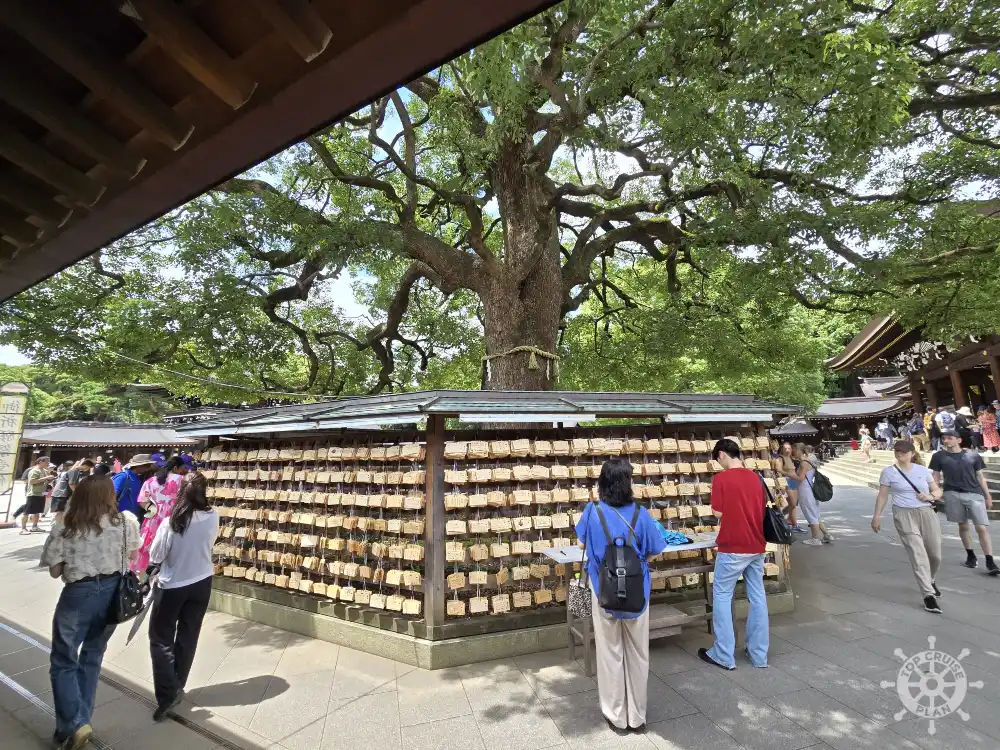
It is a popular place to witness traditional Shinto weddings, especially on weekends. Visitors can participate in Shinto practices, such as making offerings, writing wishes on ema wood tablets or simply enjoying the soothing atmosphere of this sacred retreat.
Like everything else we saw in Japan, we liked it very much. Of course, it is very extensive and there comes a time when, as there are so many things to see, you have to limit your time.
The next thing was to go to Shibuya to wander around a bit and see stores until lunchtime. Taking advantage of the fact that the hotel was centrally located, we took a break before the afternoon.
Shibuya
Shopping in Tokyo is super fun. In addition, everything is big: there are many cosmetic stores and department stores with everything you can imagine. The big brands have spectacular shop windows and very impressive illuminated signs. You walk and walk and there is no end to them. The Disney store, even if you don’t buy, is worth a visit. From the outside it looks like a castle, it is amazing.
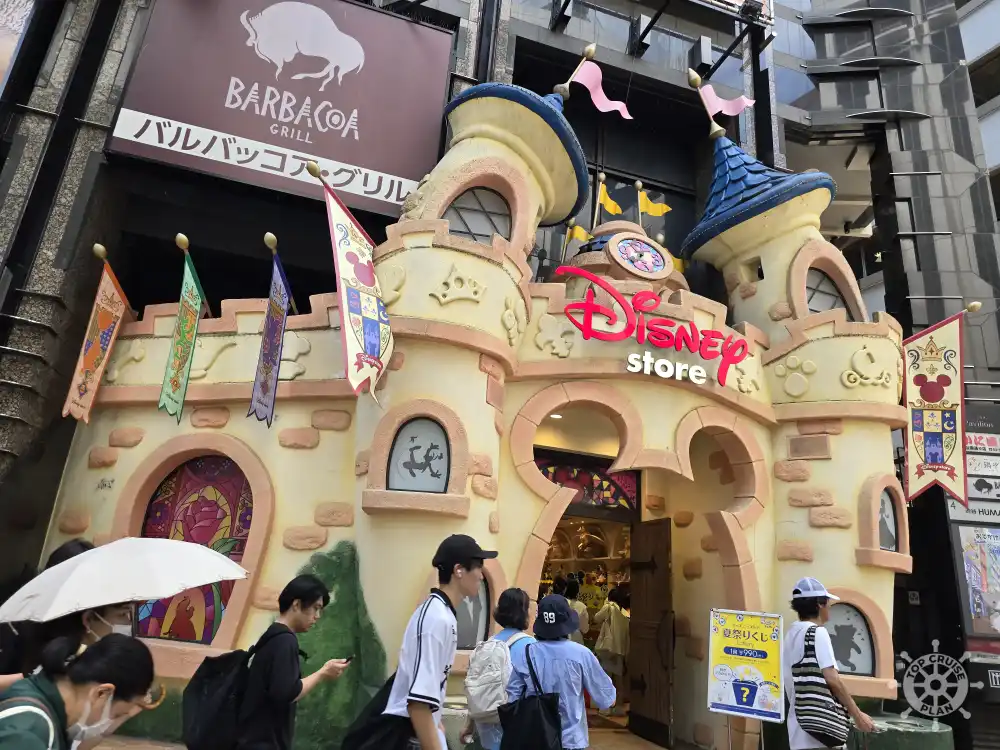
There are many people on the streets, but very quiet. Everyone goes at their own pace, but you have the feeling of being in a safe city.
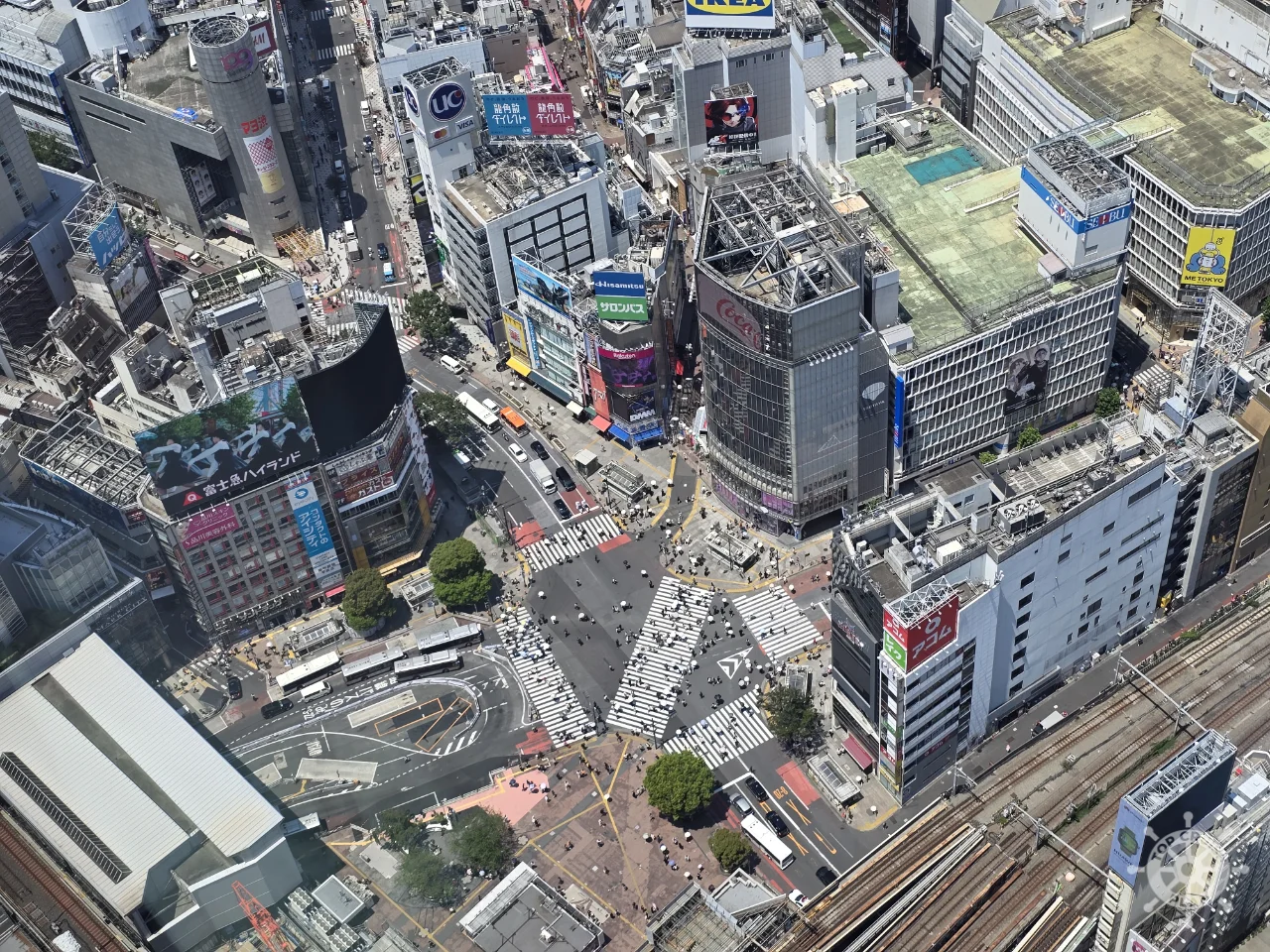
We went to the Shibuya Scramble, the Shibuya Crossing, known worldwide as the busiest crosswalk on the planet and a symbol of Tokyo. Located in front of Shibuya Station, this crossing is a fascinating demonstration of organized chaos. When the traffic lights turn red for vehicles, a human tide of up to 2,500 people simultaneously advances from all directions, flooding the asphalt in an impressive confluence of paths. When it turns green to pass, there are people running into the middle to take selfies.
Surrounded by giant video screens and neon lights illuminating the night, the atmosphere is electric and futuristic. The experience of immersing yourself in the crowd is unique, a total immersion in the frenetic pace of the Japanese metropolis.
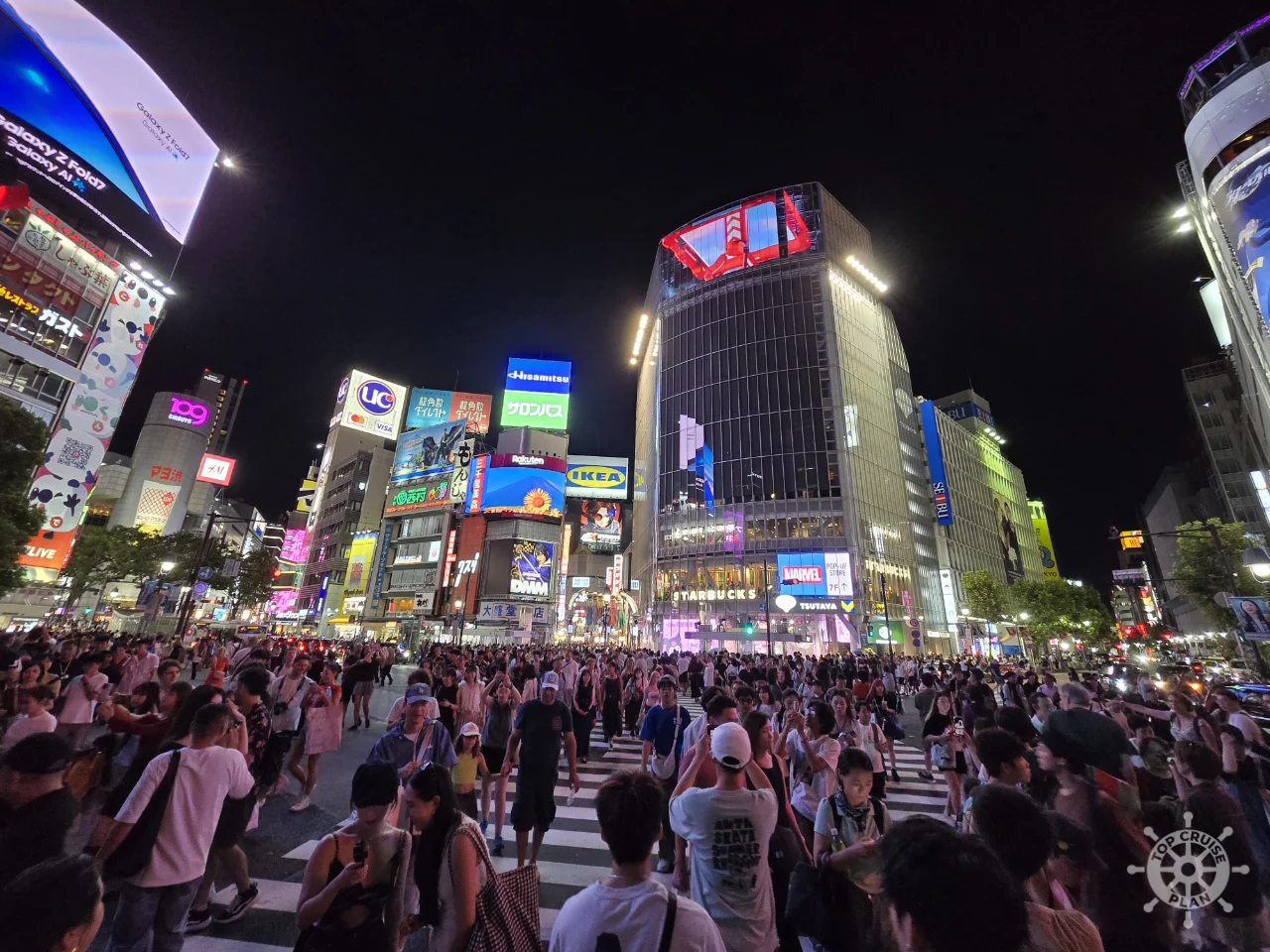
Then, in the evening, we passed through again. The intersection, illuminated by giant video screens and neon lights, comes even more alive. The nighttime atmosphere is even more electric and futuristic. Without a doubt, Shibuya is an unmissable stop for any tourist in Japan.
As the epicenter of youth culture, Shibuya is a haven for shopping and trends. The iconic Shibuya 109 building sets the fashion pace, while bustling streets like Center Gai offer a myriad of stores, restaurants and entertainment venues. Modern complexes such as Shibuya Scramble Square, with its “Shibuya Sky” observation deck, offer spectacular panoramic views of the metropolis.
You can’t visit Shibuya without greeting the endearing statue of Hachiko, the faithful dog who waited for his owner for years, a touching meeting point that contrasts with the frenetic pace of the surroundings. Shibuya is not just a place, it is a total immersion in the rapid pulse and dazzling modernity of contemporary Japan.
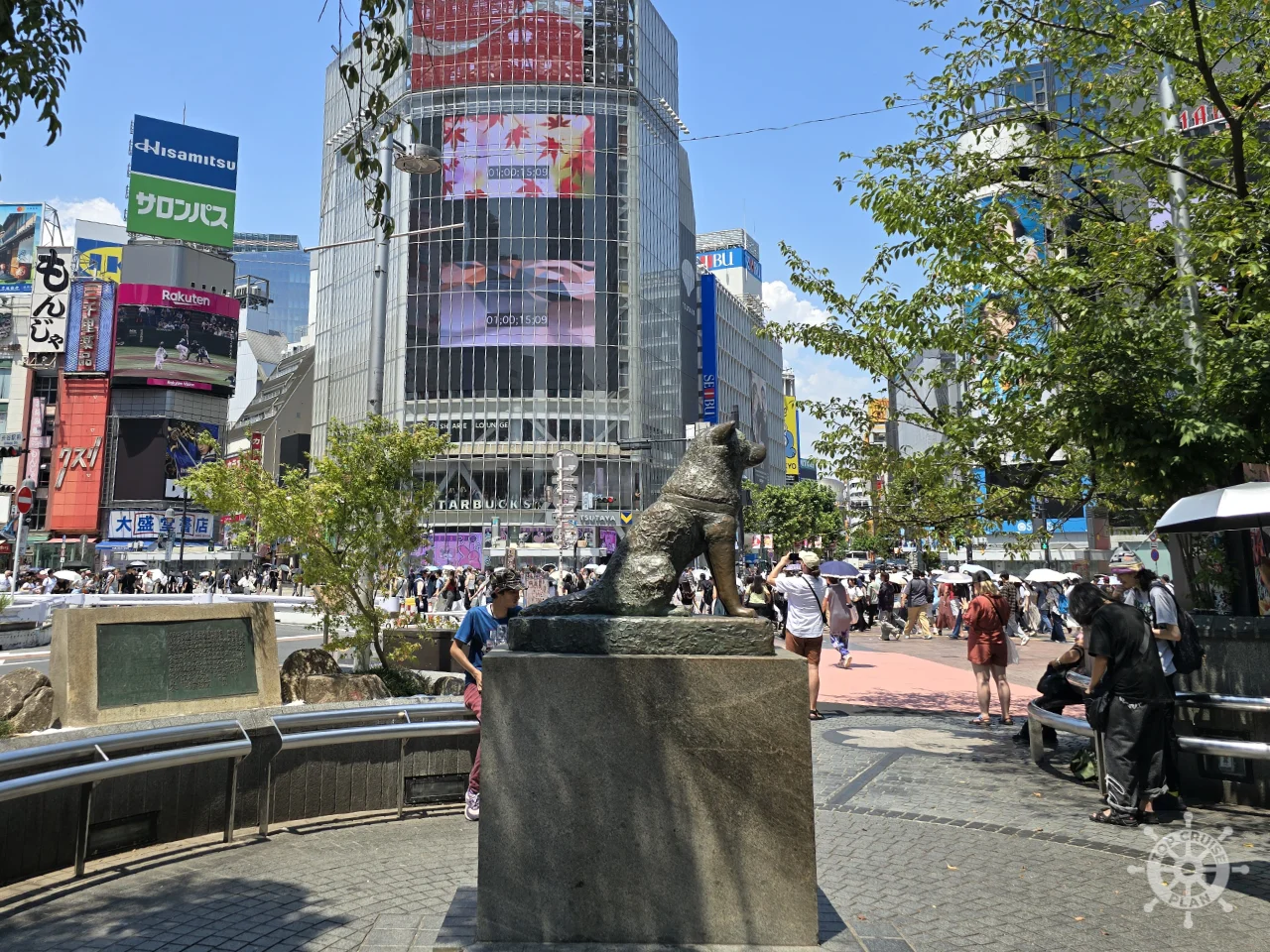
It was time for lunch and a break to recharge our batteries.
Kabukicho
In the afternoon we took the subway to Kabukicho in the heart of Shinjuku. It is Japan’s largest nightlife entertainment district, nicknamed “the city that never sleeps”. Crossing its iconic red gate, you are immersed in a maze of neon lights and overflowing energy. Its streets are lined with restaurants, karaokes, bars and pachinko parlors, offering endless options for a Tokyo night out.
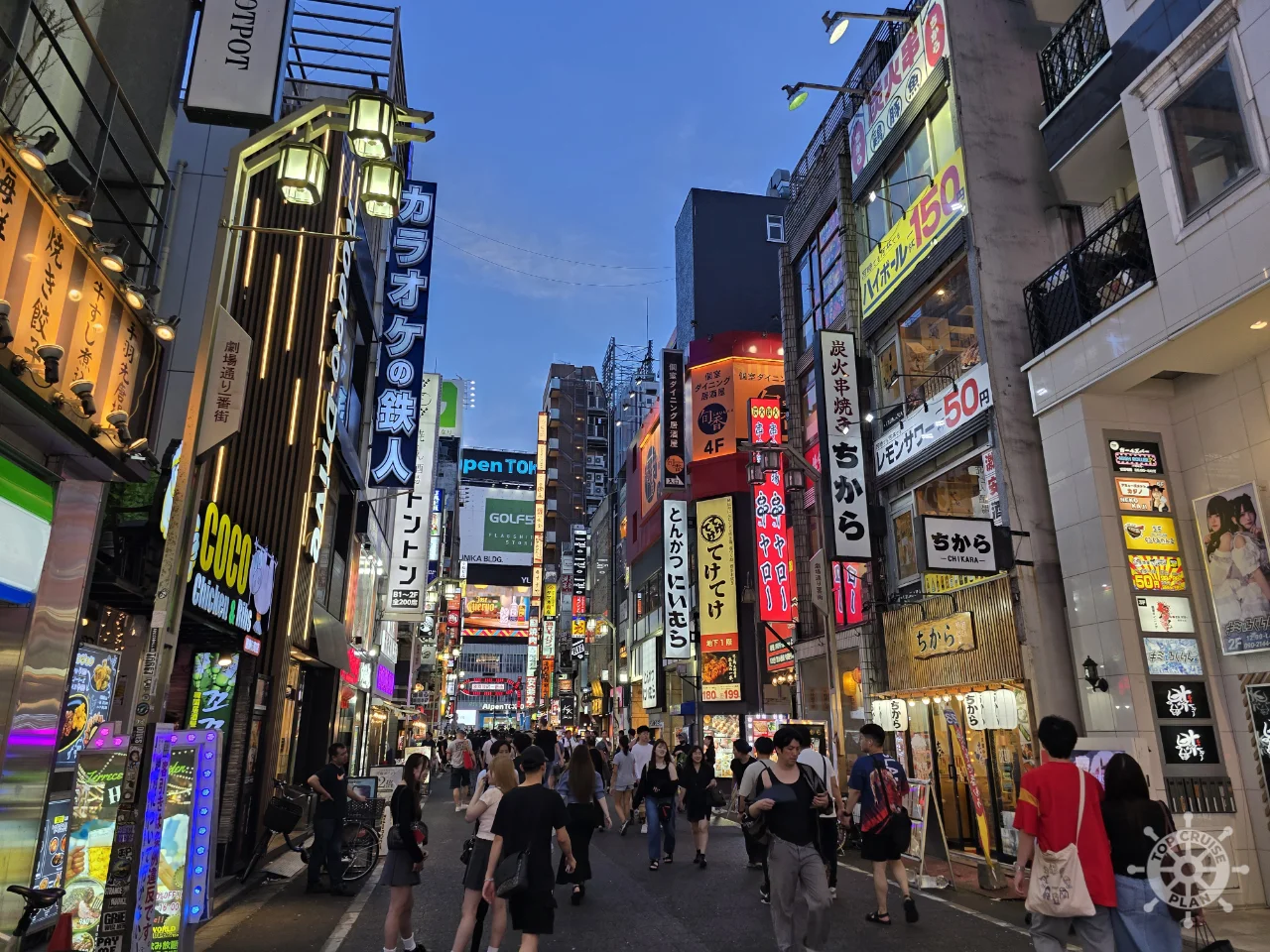
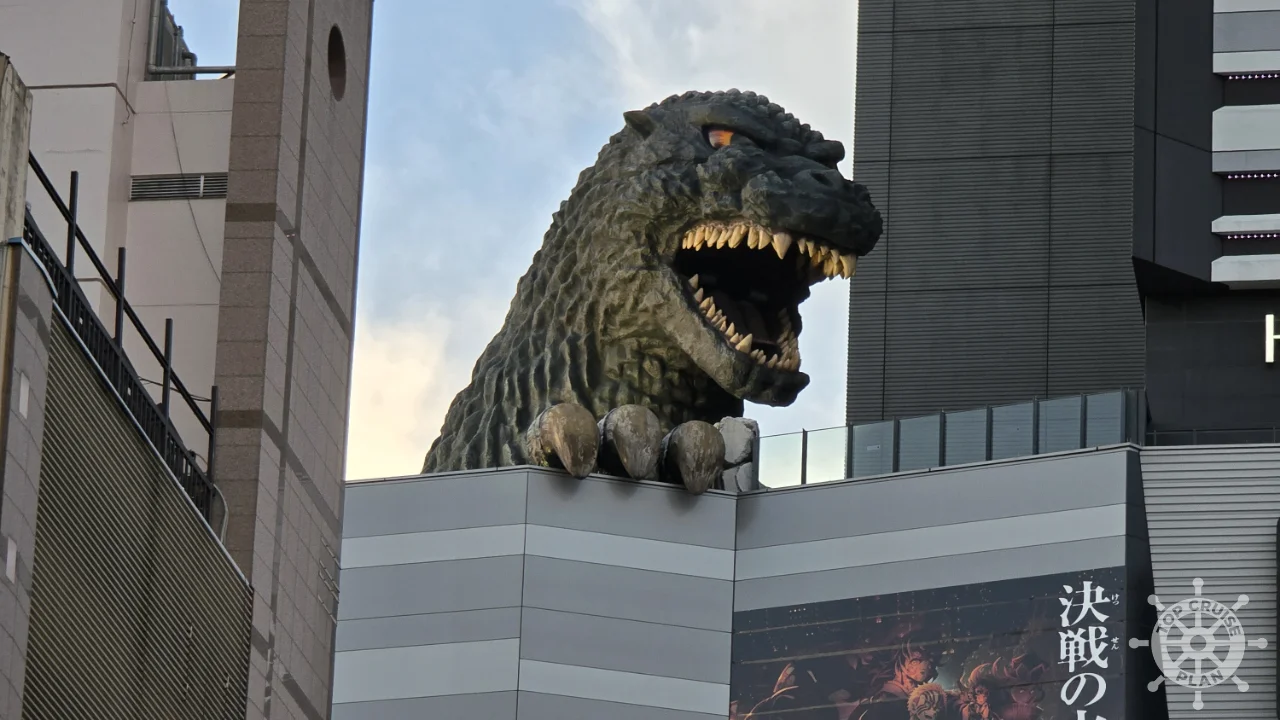
An unmistakable symbol is the head of Godzilla, very curious, peeking from the terrace of the Hotel Gracery Shinjuku (above the Toho cinema). This life-size replica of the iconic monster’s head has become a symbol of the district and a must-see photo spot.
A few steps away, the nostalgic charm of Golden Gai offers a unique experience with its more than 200 tiny bars. The modern skyscraper Tokyu Kabukicho Tower adds a contemporary touch with its entertainment and dining offerings.
Although known for its hostess clubs and adult atmosphere, Kabukicho is a fascinating spectacle. Tourists are advised to ignore street hustlers to avoid scams. Despite its reputation, it is a safe place to stroll around.
TOKYO Night & Light
Continuing our planning our next objective was to go to Shinjuku to see the projection mapping show performed on the facade of the Tokyo Metropolitan Government Building (also known as Tocho).
It has become one of the most popular and spectacular nighttime attractions in the city. When we arrived it had not yet started and there were already many people sitting on the ground waiting to see the show.
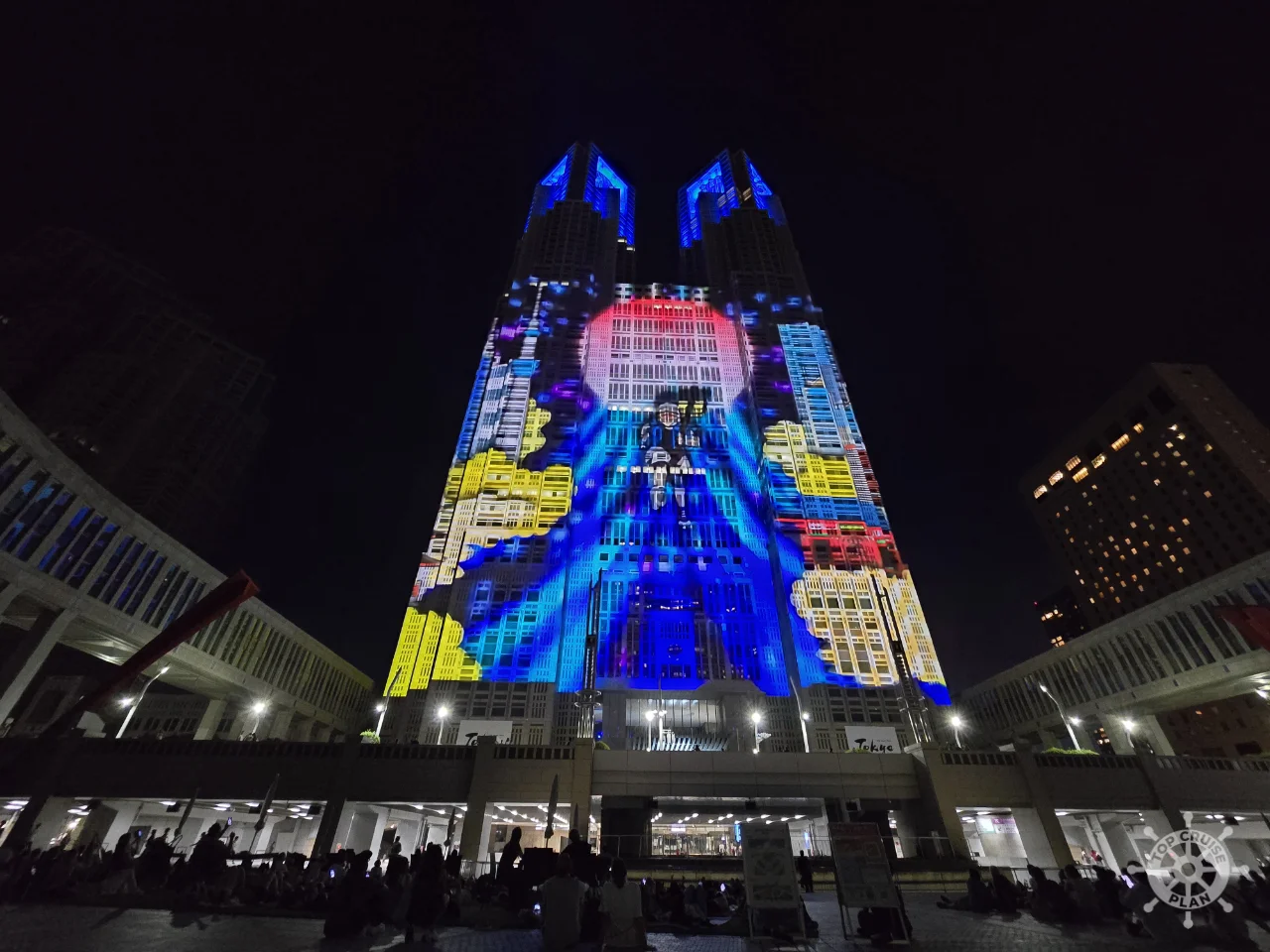
This event uses the giant facade of the main building as a canvas to project various artistic works with light and sound.
Main Features:
- Guinness World Record: Holds the Guinness World Record as the “Largest mapped (permanent) architectural projection” in the world, covering nearly 14,000 square meters.
- It’s Free: There is no cost to see the show. It can be enjoyed from the town square located in front of the building.
- Hours: Screenings are held every evening. They begin after sunset and there are several screenings of about 15 minutes each, approximately every half hour, until 21:00 or 21:30. Starting times vary according to the time of year (they start earlier in winter and later in summer).
- Varied Content: The program of screenings changes regularly. It includes artistic creations depicting Tokyo’s nature, culture and monuments.
- Special screenings: Themed shows are often shown, especially on weekends and holidays. One of the most famous is “Godzilla: Attack on Tokyo”, where a 100-meter high Godzilla is seen on the facade of the building.
It is an excellent free activity to enjoy the night in Shinjuku and can easily be combined with a visit to the free viewing platforms located on the towers of the same building. We liked it very much.
Afterwards we headed to Shibuya for dinner and took the opportunity to stroll around. This was the end of our second day in Tokyo. For the return day we planned to visit the famous Shibuya Sky observation deck and do our last souvenir shopping.
Shibuya Sky
Our last day in Tokyo arrived. We had the tour scheduled for 11:30, so before we went we went to Don Quijote for our last shopping and then headed to the viewpoint.
Shibuya Sky is the trendy viewpoint in Tokyo and is considered one of the best in the whole city.
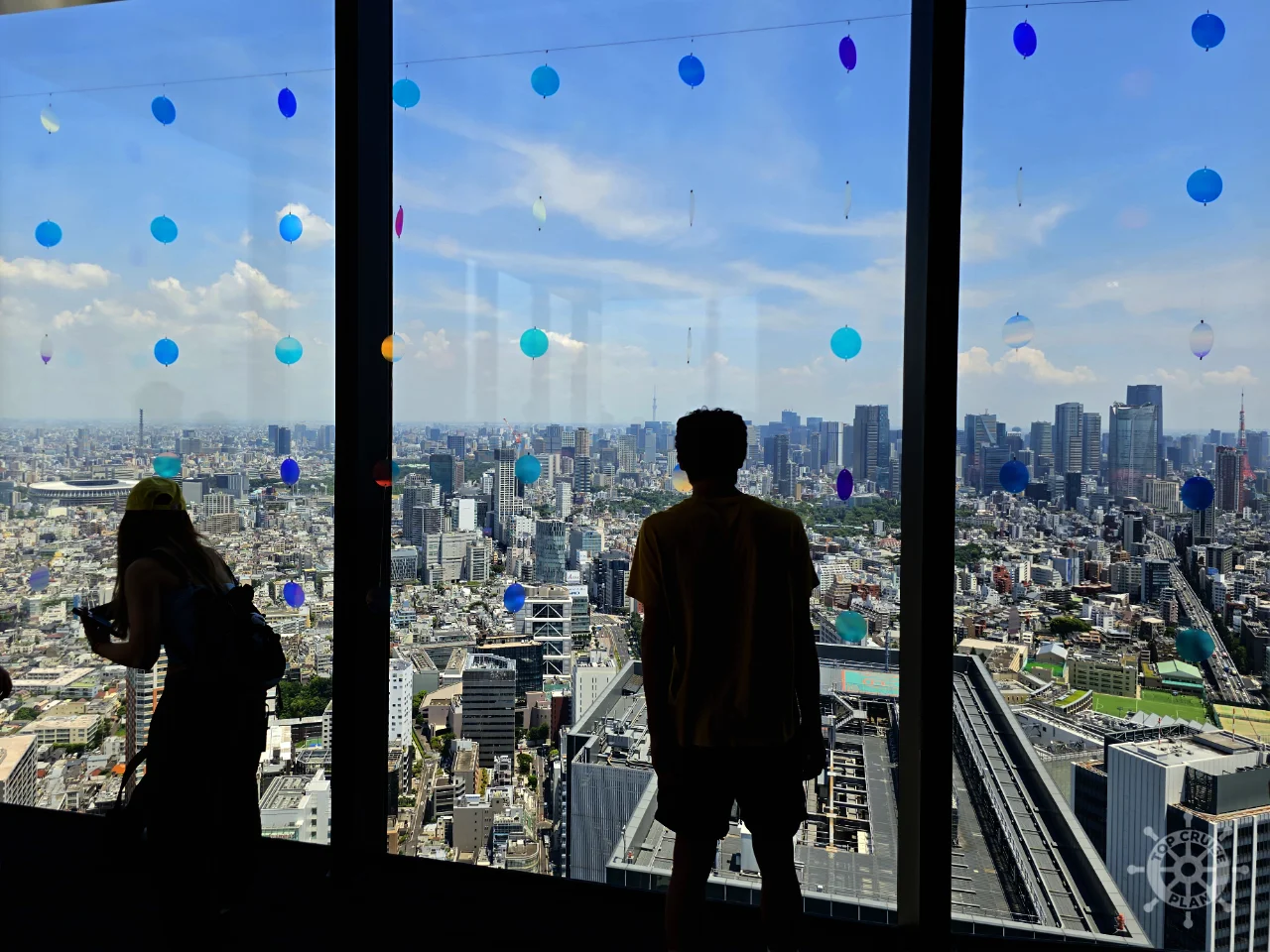
- Location: It is located at the top of the Shibuya Scramble Square skyscraper, just above Shibuya Station.
- Height: Approximately 229 meters.
- Features: Offers a 360-degree panoramic view from a spectacular open-air rooftop called the “Sky Stage”. The glass walls and “Sky Edge” corners give you the feeling of floating above the city. In addition to the rooftop, it has an indoor gallery (“Sky Gallery”) with digital art installations. When we visited we were told that the open air area was closed, but we still went up and really liked it. The buildings were lost from view due to the immense size of the city.
- Views: From here you can perfectly see the famous Shibuya Crossing, Tokyo Tower, Tokyo Skytree and, on clear days, even Mount Fuji.
- Price: There is a fee and it is strongly recommended to buy tickets online in advance, as they sell out easily. We did it the day before and were able to choose the time.
After this visit we went for lunch and around 4 pm we took a cab to the airport. There was a lot of traffic and it took us almost an hour to get there. We saw how little by little we were leaving the city behind. It has been an unforgettable trip, we liked it very much and without a doubt if we have another opportunity we will come back.
With this chapter we put an end to the series of our cruise trip to Japan departing from South Korea. We hope you enjoyed it and that these articles have been useful to plan future trips, see you soon!